Sunday, June 12, 2011

Fear Her


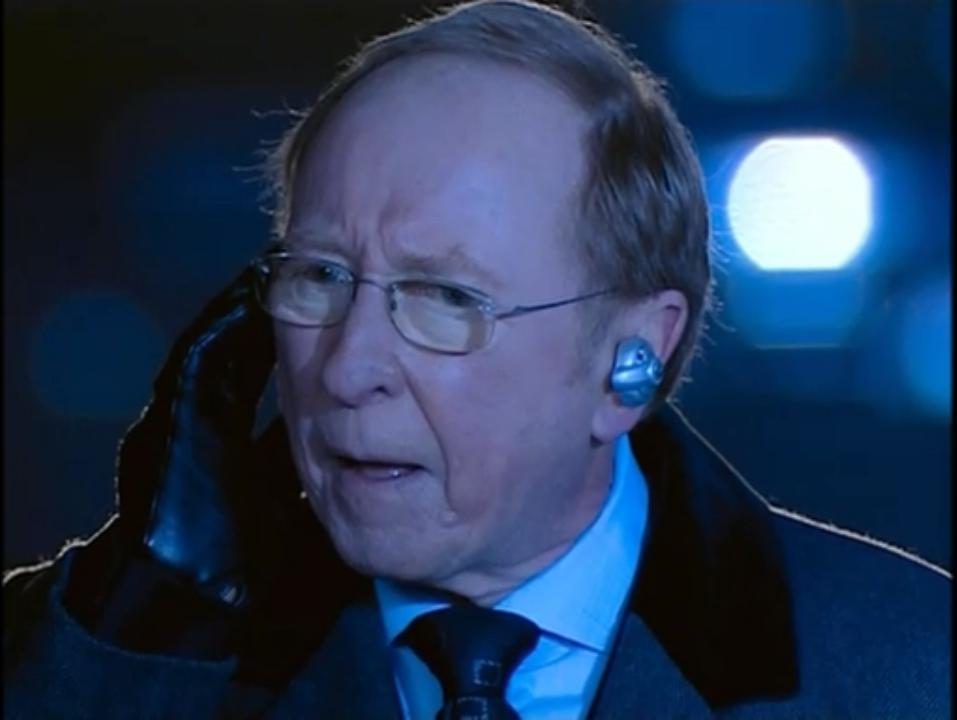
So, my review of The Idiot's Lantern was a bit brief.  It's a problematic episode to review.  It's not a bad one - perfectly competent and not really boring.  It's not a good one, though, either - there's no real tension, or excitement, or particularly memorable humor, or strong characterizations.  Nothing really imaginative.  The one creepy idea it has - people's faces being erased - isn't done in a particularly creepy fashion.  It's very, very mediocre.  But it's also one of the rarest birds in Doctor Who: it's an episode that isn't interesting.

And that's frustrating.  Doctor Who is almost always interesting.  Even when it's bad, even when it's really, really bad, it's interesting.  The worst of the worst -- Time and the Rani, Timelash, Terminus, Nightmare of Eden, The Celestial Toymaker -- are all in some ways interesting.  They have settings and ideas that are, on some level or another, intriguing.  But The Idiot Lantern doesn't.  There's not one interesting, original, or unusual thing about it.  It's really hard to do that with Doctor Who, and maybe it deserves some sort of reward for actually pulling that off.


Fear Her is like The Idiot Lantern, except bad.  Really, really bad.  And unlike those other terrible episodes, it isn't even interesting.  It's difficult to believe that a director as good as Euros Lyn and a writer as talented as Matthew Graham could make something as fundamentally awful as The Celestial Toymaker, but by making something so terribly uninteresting, they've actually, in some ways, created something much, much worse.

Thursday, June 9, 2011

A Good Man Goes To War


What a mess - an incoherent stream of set-pieces, some brilliant, some not.  A lot like Journey's End.

I should probably mention that I liked Journey's End.  I didn't like this one quite as much, but like that one, I have to admit that the highlights were fantastic.  So let me rephrase that opener: what a wonderful, glorious, magnificent mess.  A failure, yes, but a fantastic failure.

Tuesday, May 31, 2011

The Rebel Flesh / The Almost People

One of the best things about Doctor Who is its ability to go absolutely anywhere.  With all of time and space and a character like the Doctor, you never need to see the same story twice, and can continually come up with something brand new like The Doctor's Wife.  It never has to fall into formula.

Of course, sometimes it does, anyway.  Inevitably, every era has its cliches.  William Hartnell had sci-fi revolutions, Patrick Troughton had bases under siege, Jon Pertwee had UNIT / Master stories, Tom Baker had way too many teeth, and so forth.  And that's not always a bad thing.  Troughton's era may just be one base under siege after another, but some of those include The Power of the Daleks, The Web of Fear, and Fury From the Deep.  And none of his base under siege stories are really bad.  That's the advantage of a good formula: you may get repetitive, but you won't get very many duds, either.

The Rebel Flesh and The Almost People repeat themes that New Who has gone over many, many times, most obviously with last season's Silurian episodes.  In fact, other than the monsters being semi-clones, this pretty much is the Silurian story... but with better atmosphere, dialogue, characterizations, makeup, and underlying ideas.  It certainly has its flaws, but it's a good episode in an exceptionally strong season.

The best thing about the story is Matt Smith.  Yet again, he weaves his curious magic through the dialogue, making the Doctor by turns intelligent, authoritative, compassionate, goofy, alien, and, of course, a very old man in a very young man's body.  The second half of the story throws a brilliant wrench into the tale with the Flesh Doctor.  And yes, the experience of two Matt Smiths being Doctorish is every bit as awesome as it sounds.  Smith carries the story through some very rough patches with sublime brilliance.

As for the Doctor himself... well, he's clearly in the midst of some vast plan, but we have no idea what he knows or what he's thinking.  Which is always one of my favorite modes for the Doctor to be in; we see him manipulating not only the new characters, but the companions themselves.  And, of course, we have no idea what he's up to.  The difference here is that even at the end, we only see a glimpse of what he knows and is working toward.  His final act seems oddly callous and cruel, but we're left not really knowing why he's doing what he's doing.  And, after all, he's pulled this sort of thing before.  This is the Eleventh Doctor at his edgiest and most mysterious, and it's a blast to watch.

Rory gets a very strong outing.  Being with the Doctor has pulled Rory's inner strength to the fore, and he shows tremendous bravery and compassion throughout.  He's truly heroic, even when he's being cruelly manipulated.

As for Amy, well... we'll get to that later.

The sets and lighting are incredibly atmospheric, adding a seriously creepy overlay to an already visceral and eerie story.  The Flesh-things look creepy in all the right ways, going from looking totally human to blobs to everything in between.

The Flesh is a fantastic concept.  The story has a strong moral center, but it remembers to treat it with great complexity.  It helps a lot that the characters are nicely defined and superbly played all around.  We get a real sense of who all these people are without spending a lot of time with them.


For about 75 minutes, the story rocks along, full of suspense, shocks, and humor.  Unfortunately, near the end, it gets lost.  There's a cool-looking monster at the close, but it doesn't do anything.  The climax basically consists of running down a single hallway, closing a door, and then arguing about who's going to stay being, even though it's not convincing that anyone needs to stay behind.

What's more annoying about the end is that after treating the Flesh and the idea of sort-of sort-of-not clones with a lot of thought, it goes an easy, unsatisfying route to resolution, not leaving the various moral questions unanswered so much as forgetting it asked them in the first plays.  It doesn't follow through on any of its themes or most of its characterizations.  The story ends on a whimper, rather than a bang.

... the story proper, that is.  After fizzling on its main plot, it goes into the TARDIS where the Doctor and companions discuss the previous adventure, but the Doctor suddenly gets very, very dark, and we get a pair of horrifying twists regarding Amy.  She hasn't had too much to do for most of the story, but the ending is entirely on her.

And it's a doozy of a finale.  The Almost People ends with a stunning cliffhanger... and an incredibly high note, redeeming a very flawed climax.

The great thing about Doctor Who may be that it can go absolutely anywhere, but if it does fall into business-as-usual, it's pretty forgivable if it's done well, with lots of clever ideas and creepiness and character and Doctorishness.  And this one totally pulled that off.


RATING:

* * *


SIDENOTES:

  • This was written by Matthew Graham, who previously wrote the abysmal "Fear Her".  Now I'm convinced that truly was a tragic fluke.  Graham, consider yourself redeemed. 

Love and Monsters

As much fun as it is to go through action-driven Doctor Who stories, every now and again, it's nice to sit back and see something offbeat and experimental like Love and Monsters, which uses the Doctor as a background character in a romantic tragi-comedy.  And thanks to wonderful characterizations by Marc Warren as Elton Pope and Shirley Henderson as his love Ursula, it works beautifully... for a while.  Watching these two lonely people meet due to their mutual fascination with this mysterious traveler and then fall in love is absolutely charming.  Jackie's presence adds immensely to it; the scene where Elton tries to get information from her is a comic gem.

And then... and then, the monster shows up, and it all falls to pieces.  Partly because he looks like Fat Bastard painted green, and partly because Peter Kay does a Fat Bastard impersonation.  The monster is way too goofy, even for a comic Who story.  It tramples the tragic elements completely, and is too weird for the comic elements to work.

The reason for the Doctor and Rose showing up at the climax is a brilliant laugh, but otherwise, the second half of the story limps to a whimper.  And then it closes on an awful fellatio joke, and adds distasteful to a weak conclusion.

But the experiment of throwing an offbeat character romantic comedy-tragedy into the story?  Total success.  It's when the actual plot comes up that the whole thing derails.  But it's great seeing Doctor Who try something this bizarre and risky.  If only the plot had taken the same risks...

RATING:

* * ½

The Impossible Planet / The Satan Pit


Something I've talked about several times is the unfortunate default format of the Davies-era show (and, to this point, the Moffat era, though he seems to be moving away from it).  See, for most of Doctor Who's run, the normal story length was four 25-minute episodes, making for stories lasting just over an hour and a half.  And there's a reason that's the right length.  Because Doctor Who is about a madman with a magic box that can take him to any time and any place, and because it's very character-driven, it has a greater burden than most shows: every single story has to succeed at world-building, convincingly transporting us to a brand new time and place.  Every story has to develop a new cast of characters.  And it has to take the time to tell a compelling story.   It's really difficult to cram all that into 45 minutes.  Not impossible, but you are restricted to only one or two compelling characters and a simple plot.  And Doctor Who can be and should be so much more than that.

Which brings up another point, something I've probably hammered too much: this show shouldn't be restricted to Earth.  Not that we should never spend time on Earth, but we have all of time and space.  Earth gets kinda boring after a while.

This isn't to say I dislike the Davies era.  On the whole, I'm very fond of Davies' version of the show.  I think he made it fresh, energetic, exciting, modern, and very dramatic, and gave us several of the finest stories in the show's history.  And what's more, he really didn't give us more than a small handful of duds along the way.  Even the lesser stories in his era were usually more mediocre that truly bad.

That said, Impossible Planet, as a well-structured 90-minute story set on a fantastic landscape, is exactly what I'd been waiting for from the new series when I got to it.  It opens exactly where it's been needed for a season and a half: somewhere not-Earth.  Eighteen stories into the new series, and this is the first time that the Doctor, actually sets foot on somewhere that isn't Earth, or Earth-orbit, or New Earth.  It's truly somewhere new.  And what a spectacular setting!  A station on a planet orbiting inside the event horizon of a black hole...


And now, with modern effects and a little money, it looks absolutely stunning.  The world-building is superb.  It's not only imaginative and well-produced; it has a strong sense of geography, crucial for what turns out to be a base-under-siege story.

And then it one-ups that with the introduction of the Ood.  Not only is it a fantastic makeup job, but they're a genuinely fascinating race.  Here, in their first appearance, they're voluntary slaves, a terrific concept that brings up all sorts of moral dilemmas that the show will later only sort of deal with.  They also bounce very effectively from convincingly friendly to absolutely terrifying.

Next, the Doctor is cut off from the TARDIS - of course - but this time, it seems permanent.  It's not nearly as convincingly just gone like in Frontios where it outright disintegrates in front of the Doctor's eyes, leaving only a hatstand never seen before or since.  I mean, it just fell down a cliff.  No big deal.  But there's a more important difference here: there, after the stunning cliffhanger, Frontios just sorta forgets about the TARDIS disappearing until it shows up at the end.  No discussion, no wondering what's next for our stranded explorers.  Even the Doctor doesn't seem that upset.  Here, though, it actually thinks through what it would mean to the Doctor to really, truly lose the TARDIS.  His discussion with Rose about their future is perfectly written, nailing their relationship.  Rose, of course, talks about settling down, maybe together or something, you know, but the Doctor totally ignores her.  He loves her in his own way, but that's not how things are.  It's a complex relationship, beautifully captured in just a few short lines of dialogue.

Besides, we all know he just lost his true love. (actually, he says as much, pretty much right to Rose: "I need my ship! It's all I've got! Literally the only thing!")

Of course, it's not long before things start getting really, really bad.  One of the crew members, Toby, is possessed by an evil entity and starts killing everybody without getting noticed, the Ood go crazy, and the impossible planet seems like it might not be far from doing exactly what it should be doing and going straight into the black hole.  The base under siege elements are excellent.  There's a genuinely sense of escalating terror and reduced spaces.  There's also an excellent sense of geography; you feel like you could draw a map of the base after the story ends.

There's one particularly riveting sequence in The Satan Pit where the surviving characters are forced to crawl through the vents.  It's an old cliche, but it's done brilliantly, particularly in the absolutely chilling shot where Toby suddenly goes from screaming for his victims to help him to silently giving his orders to the Ood.  Great stuff.

Rose is nicely characterized.  She's brave and loyal and pours herself into things, but it's also characteristically narcissistic: all her work to bring together the crew and stuff is solely to save her Doctor.

The crew is all nicely written and superbly acted.  They seem like complete, individual personalities.


And then there's Toby, the possessed.  Will Thorpe's performance is absolutely sensational.  I could site virtually every scene he's in as an example; he's just amazingly creepy.

The Impossible Planet and The Satan Pit stand out in nearly every way, with a brilliant setting, strong characterizations, superb acting, and some terrific horror scenes...

... but if Doctor Who was going to take on Satan himself, it would have been nice if its depiction of the Devil had been a little more sophisticated than the version in Tenacious D and the Pick of Destiny.


I guess you could argue he isn't necessarily the Devil, but building him up like that forces the result to aim pretty high.  For The Devil, this guy's a pretty weak, uninteresting character. I swear, there is a more powerful monster somewhere in every single season of the show -- he isn't anywhere near as compelling or as threatening as villains like Edrad, or the vampires in State of Decay, or even, say, the steampunk Cyber-King thing.  It's a really weak villain.

I mean, he has the power to, what, possess one person? If and only if that one person reads his symbols one too many times? He also influences the Ood, but honestly, that doesn't seem like that big of an accomplishment. The Doctor mentions the Devil who appears in legends throughout the Universe, but on Earth, at least, in many religions and myths, the Devil is the great liar, the master manipulator. In most versions, he's a trickster -- Satan, Loki, Mara -- not just an ordinary monster. The Doctor taking on that challenge, of an evil far trickier and more manipulative than he is, should be fascinating. Instead, it's boring because this villain, for all his build-up, isn't all that powerful by the Doctor's standards, and isn't actually interesting for any other reasons.


Its defeat is the final insult: his plan succeeds, succeeds: he has escaped the unescapable prison, has a ride to an inhabited planet, and tricked the Doctor into a wild goose chase, leaving the Doctor to give his awesome Doctorish monologue to himself.*  The only thing he has to do, literally the only thing, is not tell everyone he's possessing Toby's body.  But no, in one of the most hilarious uses of the Talking Killer Syndrome ever, he turns monstrous and starts ranting and raving.  So, of course, Rose kills him cleverly, and then quips... no, no, you can guess it.  It's not a good quip.  Nothing clever or interesting.  Just the most obvious possible one.

* Clever idea on the writer's part, by the way.  It'd be brilliant if the actual conclusion was satisfying.

And that kills it for me.  I find the villain totally laughable.  More laughable than the Creature From the Pit, or the Menoptra, or, hell, the Optera.   The story will throw out a brilliant scene like the Doctor ruminating on the existence of God, and then has some laughing giant with horns appear, and don't even have the courtesy to give him a good rock-off.
"I'm the Devil, I can do what I want
Whatever I got, I'm gonna flaunt
There's never been a rock-off I've ever lost..."

You know, if the climax wasn't so lame, I'd be a lot more forgiving.  But yeah, he doesn't die because the Doctor is clever, or he falls to his flaws, or anything like that.  He dies because he starts monologuing when that is the single thing that could possibly kill him.

And that's it.  Everything I wanted in a Doctor Who story except one thing, but that one thing is so bad it ruins the whole thing.

But hey, it's not on Earth!

RATING:

* * ½

Monday, May 16, 2011

Sunday, May 15, 2011

Rise Of The Cybermen / The Age Of Steel


The Tenth Planet, we were introduced to a horrific mirror version of humanity, people who had replaced more and more of their bodies with spare parts until they were machines.  They were human but not human.  Their look and voice enhanced this terrifying vision.  They were also intelligent, logical machines who convinced some people to volunteer to become cyberized. 


They never appeared in Doctor Who again.  Later, there were creatures who called themselves the Cybermen and said they came from Mondas, but they weren't the Cybermen.  They were just evil robots.  Cool evil robots, threatening evil robots, fun evil robots, but evil robots.  Never again in the classic series were they the object of such psychological and physical horror as their forebears.


Which isn't to say I don't like the later Cybermen.  I enjoy every Cyber story to some extent except "Revenge", (yes, even Silver Nemesis, at least up to a point) and certainly get some whimsical joy out of them.  But after The Tenth Planet, I was always waiting for a story that really got what made them so original and eerie, and never really found it.


Rise of the Cybermen and The Age of Steel aren't quite the episodes I was waiting for, but they're really, really close, and in a few moments, they do capture excactly what I always wanted out of them.  Oh, they still work on the more common level: they're incredibly dangerous, virtually unstoppable robots.  But in exploring an alternate version of their origin from another universe, it finds some of that inhuman humanity.  We watch humans being led away and forced to take the "upgrades."  We see the horrific saws and tools used to splice the metal into the humans.  There's one especially unnerving scene in the second episode where the Doctor opens up a Cyberman and finds shredded flesh inside.

Also, the tools they use to cut people up?  Excellent.

And the Doctor's actual defeat of the Cybermen powerfully digs to the heart of their mix of human and machine.  It's far and away the most satisfying defeat of the Cybers in the history of the show.

As for their redesign... well, they definitely look slick and big-budget.  Very shiny, very big, very threatening... but totally robotic.  There's no hint of humanity in the design, which sucks out a little bit of the meaning.  They're also really, really loud when they walk, which makes the various scenes when they walk up and surprise the heroes kinda hard to buy.  But on the whole, this is a superb outing for the Cybermen.


And the rest of the episode, you ask?  Well, the production team did one masterstroke: hiring Graeme Harper to direct.  Back in the old show, Harper directed The Caves of Androzani and Revelation of the Daleks; the former is almost universally considered one of the finest stories ever produced in the show, and the latter is a masterpiece of atmosphere, intensity, and pacing, regardless of whatever flaws the script may possess.  Harper made two of the best-looking, most atmospheric, and most gripping stories in the old show, directing with the kind of energy far ahead of its time.

He's lost none of his touch.  Rise of the Cybermen and The Age of Steel is a superbly made action yarn with overtones of horror, intense, thrilling, and compelling.


As for the story itself, just keep in mind that while not everything is great, it's all done really, really well.  We start Rise of the Cybermen with the Doctor, Rose, and Mickey accidentally traveling into an alternate universe because... I guess because RTD has this belief that every Doctor Who story has to be about planet Earth, and he's gotta bring back the Cybermen with a big introduction, leaving us with an alternate origin story.  Which is fine, except that this alternate universe isn't really all that interesting.  The one other time Doctor Who did the alternate universe thing, we got Inferno, which turned all the companionish characters into the villains (including the Brigadier with an eyepatch), and then went absolutely insane near the end because on an alternate earth, you can do anything you want.  Here, we get... um, blimps.  An alternate universe with blimps everywhere.  Otherwise, nothing too interesting.  The UK has a president instead of the prime minister.  That sort of thing.


Mickey splits from the other two and after meandering a bit, finds that he has a double on this world named Ricky (of course), who is a tough-guy revolutionary. 


Rose, meanwhile, decides she has to look up her father, which means that we get to go through the whole Rose's father thing again.  Eventually, in Age of Steel, it does play out in an unexpected way, but for most of Rise, it just feels like an inferior rehash of Father's Day.  Shaun Dingwall is terrific again, and we do get the great bit where the Doctor and Rose sneak into his place dressed as servants.  We see an alternate Jackie who is... well, she's got all the negative, obnoxious characteristics of regular Jackie, but without the redeeming qualities.


Other than that stuff, this is just earth.  Nothing too imaginative, nothing insanely intense like Inferno.  So, outside of the Cyber stuff itself, the first episode, which is mostly about exploring alternate earth, is really well-made filler.  In what I'm guessing is a nod to some of the old Cyber-stories, they don't actually show up in full until 45 minutes in, which does a good job of building their eventual appearance up but leaves us mostly just waiting for the story to get started. 

There are some really strong performances in there, though.  Villain John Lumic is mostly just ranty on paper, but Roger Lloyd Pack digs his teeth way, way into the scenery and plays him with relish.


His not-entirely-onboard lieutenant, Mr. Crane, is played by Colin Spaul with intelligence and charm, making him a highly enjoyable villainous sidekick. 


Best of all is Helen Griffin as Mrs. Moore, who plays the revolutionaries' hacker, and makes her incredibly human and likable with only a few minutes of screentime.  And also awesome.


Anyway, the first half isn't boring; it doesn't do much inherently interesting, but it's done so well by Harper and his cast that it gets the work done.  And the second half is very cool: dark, shadowy, action-packed fun.  I could probably nitpick all day with minor issues, but the second half really delivers the goods.  The Cybermen go around being threatening, the Doctor gets big speeches, stuff blows up, and so forth.  Even the uninspiring Pete & Jackie subplot from the first episode ultimately plays out in a series of unexpected and compelling ways.  The payoff for Mr. Crane is incredibly satisfying.  And the climax is terrific.


Which is to say, there's a lot wrong with Rise and Age.  But the things it gets right are so good that, personally, I don't care.  It's a fun ride thanks largely to excellent direction by the master of directing Doctor Who.  And it's one of the best Cybermen stories ever, maybe the best.

But somewhere out there, there's still that definitive Cyber-story, one that nails the creepy horror, the awesome action, and the crazed logic throughout, and delivers a truly classic episode.


Till then, though, this'll do.


RATING:

* * * ½


SIDENOTES:


  • "DELETE!  DELETE!  DELETE!"  Seriously?  That's the Cyber-catchphrase?  Lame.

  • So, since this is Mickey's last regular appearance, I guess now's as good a time as any to discuss him overall.  I have to say, it's rare to see a character turn around so much.  In Rose, he's incredibly annoying.  But the more he was developed, the more likable he became.  And to be honest, by the end of Age of Steel, I wished he would have stayed on.  With him around, it wouldn't matter that Rose never held the Doctor back when he needed it, because Mickey would have filled that spot very nicely.  The three of them as a team would have been great.  Anyway, bravo to Noel Clarke for making the most of his

  • I have mixed feelings about the Doctor's solution to the cliffhanger.  On the one hand, it comes out of nowhere.  There's no reason a subtle line couldn't have been put in the first episode to seed his solution.  On the otherhand, HOLY CRAP THAT WAS AWESOME!