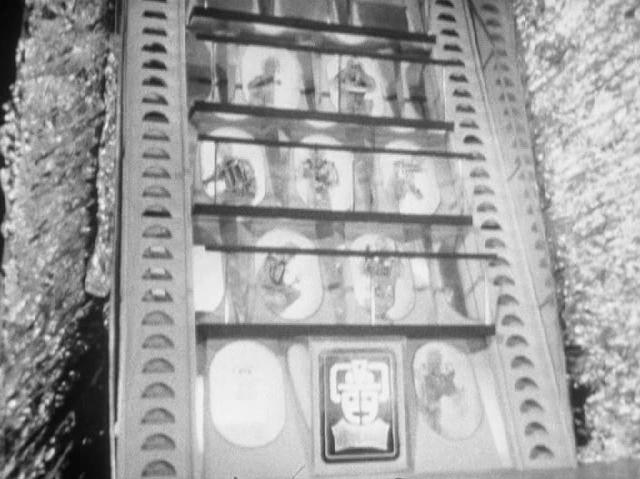
Showing posts with label Cybermen. Show all posts

Sunday, February 28, 2021

Attack of the Cybermen

"Didn't go very well, did it?"

Why, after ignoring this blog for six years, have I suddenly returned with a review of a mostly forgotten and otherwise disreputable mid-80s serial? Back in late 2014 and early 2015, I found myself with some real blocks trying to write these reviews, and, finally, the lack of any momentum or progress killed it. And the longer I got out from it, the more many of my early reviews here were a source of embarrassment, and I simply didn't bother. 

It wasn't a matter of the show's quality - I loved Series 9, found Series 10 to be uneven but with brilliant highlights. Unfortunately, I've been considerably less enthused with the last two seasons (I like Whittaker, but find Chibnall's showrunning to be about as effective as it was on Torchwood), and I guess haven't watched as much Who in general for some time. Still, after feeling deeply dispirited by Chibnall's Revolution of the Daleks on the heels of the dreadful Timeless Children, I rewatched several other New Who stories just to remind myself of how deeply I love this show. And then discovered BritBox on Amazon, which has virtually all of Classic Doctor Who, and started revisiting serials I had seen only once a decade or more ago and wanted to revisit.

And, for some reason, last night I had an urge to rewatch Attack of the Cybermen. Although its reputation is dire, I had recalled more or less enjoying it at the time even while registering some complaints with the script. And then felt the need to make it clear to the internet that I Had Opinions About A Thing.

Someone's been sneaking Cyber-snacks.
 

A bit of background on the production of this story, since this introduction isn't incredibly long or self-indulgent enough yet. But for those who don't know, it's important to understand in order to grasp what happens in this serial. Because this was Doctor Who on the knife's edge of its cancellation, and Attack of the Cybermen is the show trying to dance on that knife and splitting open its own veins.

John Nathan-Turner, popularly nicknamed "JNT", had become the show's producer in 1981 entirely through his accounting wizardry without any real creative background. He had a great passion for the show, however, and with Season 18's script editor Christopher Bidmead, (script editor being somewhat similarly to a lead writer in today's world, although they didn't necessarily write any scripts themselves) he had crafted a grand artistic success, if not a ratings one. He followed that up with the first season of the Fifth Doctor's era, which was a huge ratings success and was largely well-received. Bidmead had left after his first season, however, leaving JNT to hire first an interim script-editor for the first half of the season, and then scramble for a permanent person for the position. He chose Eric Saward, off the back of his pretty solid script for The Visitation, but who was otherwise almost entirely inexperienced outside of a few radio programs.

Still, Saward's script for Earthshock, which brought back the Cybermen after a lengthy hiatus, had resulted in a hugely popular serial, and the show's nostalgia-heavy 20th season was largely well-received. The nostalgia element, with every episode harkening back directly to some older element with returning villains, had been aided by series uber-fan Ian Levine, who became an unofficial advisor for the show.

With Levine's help, then, for the 21st Season, the show brought back two sets of old villains for the serial Warriors of the Deep. The result was a disaster. A chaotic production disrupted by Margaret Thatcher's snap election of 1983 resulted in an utterly botched adaptation of its script. Most memorably, the serial's big monster, the Myrka, ended up being literally just an ugly pantomime horse, garish overlit to boot. But the script was so wretched that James Cameron could have broken a Hollywood budget record on it and it still would have been absolutely terrible.

 And, unfortunately, Michael Grade, controller of BBC1, noticed. He had never particularly liked the show, but this was a true embarrassment, and he believed Doctor Who should not be kept on the air. Given its strong ratings, he couldn't kill it right off, but he was ready to. The rest of Season 21 largely went well, building to a tremendous climax with the Fifth Doctor's farewell story, The Caves of Androzani, not only one of the greatest episodes of the show, but one of the great works of science fiction in 1984, a particularly great year for the genre.

However, that wasn't the end of the season. For some bizarre reason, JNT decided that the first story for Colin Baker's Sixth Doctor would air as the final serial of the season. However, the production had run out of money by the point, the scripts were unfinished and lousy (the writer at one point made the excuse for a delayed script that his typewriter had literally exploded), and, on top of everything else, JNT, Saward, and Baker had all wanted to make this new Doctor dark and mysterious and strange... and had botched it utterly (not Baker's fault, in fairness). The result competes strongly with Warriors of the Deep as one of the leading contenders for the worst episode of Doctor Who ever, as well as the worst work of science fiction of 1984, all the more crushing a failure after the triumph of Androzani.

So, in 1985, coming into Season 22, Doctor Who desperately needed to come out strong. Saward took the reins personally, and worked closely with Levine to devise a story bringing back the popular Cybermen that would tie into two decades of continuity. Because script editors weren't suppose to write multiple stories and Saward was already writing the season finale, he convinced his ex-girlfriend to write a draft and keep her name on whatever he rewrote. And Saward, JNT, and the production needed to nail this one. Prove that it was, indeed, worthy of continuation and funding by the tax-payers of Britain. Prove that the Sixth Doctor could be as iconic and fascinating as his predecessors. Prove that JNT and Saward could actually deliver worthy drama. 

So, naturally, our story begins in a literal river of crap, as maintenance workers wade through London's sewers. They're surprised to find a wall that shouldn't exist, and are then mysteriously killed by something mysterious that definitely isn't the villain listed in the title. 

This opening scene shows off the serial's best asset, though, the direction of Matthew Robinson. Robinson is a rare Classic Who director who isn't best remembered for his contributions to Who - after this, he was appointed the lead director on EastEnders, and later became executive producer of the show, was promoted to head of drama for BBC Wales, and ended up producing a bunch of films in Cambodia. (It probably doesn't help, though, that the two scripts he was assigned to direct in Who were this and Resurrection of the Daleks, neither of which are well-remembered despite his strong direction in both.) Robinson shoots the serial with vivid atmosphere and lots of punchy visuals and editing; it feels more like an ambitious low-budget movie than a ropey no-budget TV show. Notably, the sewers are dramatically underlit to a degree rarely done on the BBC at the time, and all the more effective for it.

Attack then moves to the Doctor and his companion, Peri, in the TARDIS. And the early TARDIS scenes are rough. The costumes, of course, are wretched; I sometimes forget just what an endless eyesore the Sixth Doctor's costume really is. Peri's, of course, is a major improvement, though, as usual, it's skimpy in a way that doesn't seem to match her character, emphasizing her curves and her boobs bouncing around. (For those who don't know, JNT was gay, but wanted Peri to always be dressed sexily "for the dads".) It's also an extremely bright, saturated pink, as though it's trying to make sure she isn't invisible standing next to the Doctor.

Can't you just feel the love?

But costumes are one thing, the dialogue is a whole other can of awful. Not only do Colin Baker and Nicola Bryant evidence no chemistry here, but the banter is just the Doctor being a total kneebiter and ignoring Peri calling him on it. And every time she tries to turn it into light, fun banter, the Doctor just spits in her face:

"I was, in fact, taking you to Earth."
"Bit of an anticlimax after all that journey."
"Ungrateful wretch."
"Well, what do you expect, applause?"
"A bit of gratitude wouldn't irretrievably damage my ego."
"Come off it, Doctor. No one is more surprised than you are that we came through it."

What, exactly, are they expecting us to feel here? Saward and Baker both had ambitions to make the Doctor a more threatening and frightening figure, but even if JNT's insistence on that jacket wasn't blowing any chance at that, there's a difference between a mysterious and frightening figure and just a total dick. It was a questionable choice to begin with, but one that might have worked. Even setting aside the early days of William Hartnell's First Doctor as the beginning of his character arc from villain to antihero to hero, Patrick Troughton's Second Doctor could totally be frightening when Troughton wanted him to be, and Sylvester McCoy would prove the same afterwards. 

But the Doctor being a scary figure requires emphasizing their alienness, their elaborate planning to fight unimaginable power and evil, and how far they're willing to go in that fight - not being an abusive bastard to their companion. It gets the whole affair off on a horribly wrong foot.

These scenes are intercut with Lytton, Maurice Colbourne's mercenary last seen working for the Daleks in the previous season, working with a crew on earth to pull off a diamond heist through the sewers. These scenes are pretty generic bank robbery stuff, but there is a degree of fun in just bare competence at this sort of thing, which contrasts unfortunately with the TARDIS scene without elevating the proceedings much.

Thankfully, when the Doctor and Peri finally arrive on Earth ten minutes in, their banter improves massively, and, with decent material, Baker and Bryant turn out to actually have some chemistry; further, the Doctor's repairs to the TARDIS chameleon circuit malfunctioning have a whimsical charm too often missing in this era. And with more comedic material, Baker shines; when he's being funny or weird, his brash Doctor shines.

"I suddenly feel conspicuous."
"Not surprised in that coat."
"No, it's more a question of having organized a surprise party and forgotten who it's for."


The duo arrives in I. M. Foreman's Scrapyard on 76 Totter's Lane - which, you see, is the scrapyard from An Unearthly Child. This serves no purpose in the story beyond being an in-joke. One could stretch, I suppose, that echoing back to the Hartnell era sort-of works with the story being deeply wrapped into several of the 1960s Cyberman stories,  given that Hartnell's last story was the Cybermen's first, but it's tenuous at best. And, more to the point, it actually foreshadows that the Cyberman references will ultimately function merely as empty continuity masturbation. (For a sharp contrast, it's worth looking at how Remembrance of the Daleks similarly harkened back to An Unearthly Child with actual purpose and thought three years later.)

While Lytton and the bank robbers wade through the sewers to get to the diamond vault they're knocking off, the Doctor and Peri, after futzing around for 10 minutes trying to find the plot, run into two evil policemen. The Doctor instantly beats the snot out of one of them, while Peri cleverly deals with the other one. It's an exciting little scene, and slightly shocking for the Doctor's quickness to a violent approach. Baker pulls off the physicality effectively, but whether or not a more violent Doctor is overly jarring is probably up to the viewer. It's certainly different.

At any rate, having still not arrived at the plot, the Doctor and Peri enter the sewers and muck around themselves. If that seems like the entirety of the first episode is either walking around in a river of poop or trying to get to the river of poop, that's because it mostly is. In Season 22, in order to come in line with the rest of the BBC, where half-hour dramas had largely be eliminated in favor of hour-long dramas, Doctor Who had doubled the length of its episodes, now lasting a full 45 minutes. Given the problems the era had with pacing half-hour episodes, unfortunately, the result here unsurprisingly consists wheel-spinning for somnambulant periods. 

But, finally, Lytton and his thieves make it to the wall that shouldn't be there, and it blasts open to reveal the Cybermen. And, points to Robinson, the reveal works. Their dramatically-lit and edited appearance is genuinely frightening in a way the Cybermen rarely have been. Of course, then they start talking, and they're just daft, clumsy evil robo-men, but hey, at least they got one good moment out of them.

We learn that Lytton isn't just a mercenary, but from a race of mercenaries, which might be the single most Eric Saward thing ever written. And now we cut to the planet Telos, which Robinson makes appropriately alien, and, slowly, the actual plot comes into view. The Cybermen were stalking around the London sewers because, you see, in the story The Invasion they stalked around the sewers. But also, they're on the planet Telos, where they burst out of cellophane walls because, you see, they did that in Tomb of the Cybermen. And they're on both places now because, you see, in The Tenth Planet, they drove their own home planet Mondas, parked it next to Earth, and tried to destroy Earth so Mondas wouldn't literally melt for reasons that I think kind of made some sort of magic crazy person sense in The Tenth Planet, and anyway now they're going to redirect Halley's comet to strike the Earth to ensure Earth so Mondas survives. And they have two leaders whose respective ranks are never clear - Cyber Leader, played by David Banks because that was his role in Earthshock (even though he died there) and Cyber Controller, played by Michael Kilgaroff because he played that role almost twenty years earlier in Tomb of the Cybermen (even though Kilgaroff is visibly... rotund for a Cyberman after 20 years). If that sounds like a bunch of incoherent, masturbatory continuity nonsense, well, it is.

'member when the Doctor fought the Cybermen in those Tombs?
Yeah, I 'member!

And, honestly, that might be forgivable if the story built up to some kind of point and/or was entertaining. Unfortunately, Lytton getting out of Poop River, London doesn't get the Doctor out of it. The Doctor doesn't arrive at the plot until 38 minutes into a 90 minutes story. He then gets captured by the Cybermen, who have already captured his TARDIS with remarkable ease. And he spends almost the entire second episode in a prison cell. He escapes with the help of a Cryon, a member of the native race of Telos, and gives the Cryon his Sonic Lance so it can suicide bomb the Cyberman base. He then gets out of there while other characters solve the plot, and, in the final scene, uses a Cybergun to kill the Cyberman leaders at a point where their deaths don't particularly matter since the base is about to blow, but fails to save Lytton. 

You may have noticed the Doctor accomplishes close to nothing in the story, and mostly just tries to catch up to a story that hums along without him. It's possible for a story to work with a minimal use of the Doctor, but if much of the episode is just following him failing to make it to or affect the plot, and he doesn't even spend the time doing anything Doctorish, how is this supposed to work? Yes, when he's not asked to be an unpleasant dick, Baker has a brash charm and humor that's fun and a physicality that effectively feels like it comes out of nowhere, but the script doesn't care to let him do much of those fun things. He does get multiple scenes casually wielding guns, though, almost as if he's really a space mercenary at heart.


That could, theoretically, be at least somewhat forgivable if said story was itself engaging, but it's mostly not. Even given that the entire first episode is walking through a sewer and that the second half has all the action, there's very little going on here. The Cybermen get that frightening first appearance, and easily take over the TARDIS, but otherwise are easily killed by their own guns, regular Earth pistols, the Doctor stabbing them with his Sonic Lance, and even a nice whack to the head with handheld metal pipe that straight decapitates them. They stumble around so slowly that gunfights feel hilariously slow even with Robinson's general skill with action. And their original concept, that of horrific mirrors of humanity with all emotion removed, is barely present except for a single line of dialogue about the weakness of emotion; they're just generic clanging tin men. Although when Lytton stabs the Cyber Controller, he bleeds green, which I guess is kind of weird.

And what of Lytton? After all, Saward's real interest here seems to be Lytton. It feels like he would honestly rather be writing a TV show about Lytton rather than Doctor Who. (Indeed, Saward recently revived the character for a comic-book miniseries.) Lytton knows more about what's going on in the story than the Doctor ever really does. Maurice Colbourne has the right charisma for such a rogue. After being cagey for most of the story, it's revealed that he's actually working for the Cryons, not the Cybermen. And the story's climactic moment ultimately rests on Lytton having his hands brutally crushed by the Cybermen (which is far bloodier and more shocking than I remembered it being), getting half-converted, yet still fighting them before dying. And so the Doctor's final line muses that "I doon't think I've ever misjudged anyone as badly as I did Lytton."


But why? Lytton was a mercenary perfectly happy to work for the Daleks! And here, he's still just a merc, just not for the bad guys. He doesn't seem to have had any change of heart, the Cryons just happen to be the ones who hired him. And the Doctor wonders why Lytton didn't tell him he wasn't hired by the Cybermen, and Peri remarks the Doctor never gave Lytton a chance, but even when Lytton did have a chance, he was needlessly mysterious. If the story's point is that Lytton was misjudged, it's a misjudgement on the part of the writer, not the Doctor.

So, if the story is a slog that adds up to nothing, what is good here? Well, the production, mainly. Telos feels like an alien world rather than just a random quarry. Both the location shooting and the studio work are atmospheric and feature an effective variety of shots. The Cryons are pretty well-executed; played entirely by women, with sing-song voices and strange gestures, and a pretty cool design, they're probably one of the best one-shot aliens of '80s Who. Sure, they'd probably look better in black and white, and the closeups show the seams, but it's still some good work. And Saward at least tries to make them distinctive individuals, even if he doesn't do quite enough.

There's also one other element that works, and it's a distinctively Saward one. As the story comes to a close, most of the supporting cast is killed off, the rest are in incredible danger, and the Cryon plan seems on the verge of failure. The all-hope-is-lost moment builds a deep tension. This tension is sadly lacking in the rest of the story, but climactic tension is something Saward is great at building to. Unfortunately, here, he doesn't pay it off, and it largely whimpers to a close, with the Doctor's brief rolling about and gunning down the Cyber leaders feeling like an afterthought.

Basically, Attack of the Cybermen is a lousy story occasionally salvaged by the execution, which is as good as could reasonably be expected for such a cheap TV show with such a tight schedule. But Saward seems to this day proud of this story, happily taking credit. (Levine also takes quite a bit of credit when asked.) Because, you see, Attack of the Cybermen is what Saward and JNT wanted Warriors of the Deep to be: a boring river of grimdark, meaningless crap, sure, but with, like, shadows and slick editing and a kinda cool monster under the circumstances. And if anyone wants to know why Doctor Who was canceled, this episode is one of the best examples of why. If this is what they think the show should be when it's working, then it deserved to die.

 Thankfully, the next story is an astounding improvement, making a pretty good case that the show shouldn't be canceled, just that maybe teh reins should be given to someone else, because there's great potential in the various elements here. Sure, it's not enough, ultimately, to save the show, but, thankfully, it lasted enough more years to go out on a high note. Eventually.

RATING:


Wednesday, July 24, 2013

Nightmare In Silver

There's two ways to look at Nightmare in Silver. The first is its success at its assignment - Stephen Moffat told Neil Gaiman to "make the Cybermen scary again."

On that level, Nightmare In Silver is a failure.

Gaiman never even tries to explore any of the psychological or technological horror they originally represented, nor does he make them particularly compelling foes even as "general monster besieging the base." His idea of scary is to have them basically be invincible by chanting "Upgrade!" Which actually manages to be even more inane than "Delete!" It also makes them so overpowered they simply aren't convincing as threats. In effect, he turns what was originally one of the most original and terrifying Doctor Who villains into laughably cartoonish ripoffs of the Borg. Even the one creepy idea Gaiman has - children cyber-converted - doesn't really land the sense of horror it should.

This is literally the least scary the Cybermen have ever been, including the dull Revenge of the Cybermen, where Tom Baker rightly declaims them as "a bunch of pathetic tin soldiers", and the goofy Silver Nemesis, where they can't even manage to effectively kill the Neo Nazis who only exist in the story as Cyber-Cannon fodder.

The other way to look at Nightmare in Silver, though, is to look at basically everything that isn't the Cybermen, and what's left is a funny, vivacious adventure with two wondrous characterizations and some rich moments of emotion and imagery.

The highlight of the episode is the Doctor. Matt Smith consistently gives the role his all, but he's rarely given a script that gives him so much to do. Not only does he get the Doctor's full range of emotion, he gets a Cyberman mind colliding with his, in addition to the Cybermind pretending to be the Doctor. Smith hasn't had a showcase like this in a long time, and the result is tremendously entertaining.

The other wonderful characterization comes from Warwick Davis, who lights up the screen every moment he's there. It's a whimsical character, something Davis does with aplomb, but he also makes the moments of drama genuinely moving. His offer to Clara is sweet on the page, but a wonderful moment in Davis' hands.

As for Clara, Gaiman gives her plenty to do, but he doesn't quite figure out who she is. After all this time, she's still a bit undefined. But Jenna-Louise Coleman is a lot of fun to watch, and Gaiman certainly understands and takes advantage of that.

He also sets it in a fantastic world worthy of more exploration than a single episode allows. How those kids could possibly be unimpressed is beyond me. (Speaking of which, while they're perfectly tolerable, they don't really add anything to the story. The one good idea - the kids being cyberized - is a frightening concept, but, again, Gaiman doesn't take advantage of it, and it doesn't really impact the episode.) And that world is filled out with characters sketched out briefly but effectively; the casualties have an impact rather than being simply a body count.

Of course, all that would work better against effective villains or plotting that made sense. The Doctor goes on and on about how they can't possibly blow up the whole planet until the climax, when suddenly we need to blow up the planet now. I suspect Gaiman intended some reasoning here, but either the episode length or Steven Woolfenden's directing flatten it. Woolfenden plays the episode as a broad kid's show, emphasizing the cartoonish and silly aspects rather than telling the story and letting the silliness flavor the tale. On the other hand, Woolfenden is one of the coolest surnames ever.


The Cybermen have a way of being functional blanks - with a couple of exceptions, they aren't interesting in and of themselves, but on a basic Attacking Monster level, they work perfectly. (honestly, only Revenge and Silver Nemesis screw that part of them up, and even there, this point remains) The Cybermen originally functioned as what El Sandifer coined "The Dark Mirrors of Humanity", but by being perfectly functional but completely uninteresting plot devices, they function as mirrors to just how the show works under the current production team.

Revenge of the Cybermen, even though it isn't actually good, still has terrific atmosphere, good horror concepts, intriguing teams, and a brilliant central cast, all of which shine throughout the Hinchcliffe era.  Earthshock showcases a production team that can build violent intensity with exceptional skill for a low-budget '80s show and has a terrific actor in the lead, but sometimes loses the heart of the program in all the action. Rise of the Cybermen shows a production team that fully realizes savvy themes and compelling character arcs both within episodes and throughout seasons and that can technically pull of anything, but sometimes dilutes its impact by playing things too broadly, and often doesn't realize its science-fiction or fantasy elements as well as its personal elements.

And under Moffat, stories are rushed and underdeveloped, but showcase rich performances, especially by Matt Smith, a consistently spectacular production, are packed with great ideas, and have a joyous, infectious sense of fun.

RATING:

* * *

Tuesday, June 5, 2012

Tomb of the Cybermen


In the years after airing in September 1967, Tomb of the Cybermen built a reputation as one of the great classics of Doctor Who - the scariest story Who ever told, full of colorful characters and frightening concepts. When it was discovered a decade later to be one of the missing serials, junked by the BBC to save space in 1969, its reputation only grew - not only was it one of the greats, it was apparently lost forever. So its rediscovery in 1992 had it heralded as the most sought-after story at last rediscovered. It was quickly released on video... to a somewhat disappointed reputation. The consensus about Tomb changed - it was a great script muddled by a low-budget production. This has lead to a belief in some quarters that the lost episodes are better left undiscovered for fear that their on-screen realization can never be as good as we imagined.


Which is ridiculous. The production is as good as '60s Who gets - vividly atmospheric, memorably designed, and featuring a couple of terrific set-pieces. And there probably isn't a Classic serial with a more effective use of music throughout the story, both stock and original, until Paddy Kingsland's arrival in 1981. No, the problem is that the story is rubbish, which actually should have been obvious long before the video release.

Friday, October 7, 2011

Closing Time


As you'd expect from a sequel to The Lodger, which basically just dropped the Doctor into a sitcom for modestly enjoyable results, there's not much to Closing Time.  The plot is minimal, the villains barely there, the danger brief.  It rests itself entirely on the comedic timing and chemistry of Matt Smith and James Cordon.

Fortunately, those two elements work like a charm.  Smith and Cordon are a fantastic comic duo.  Gareth Robert's script gives them plenty of good material (particularly the Doctor's conversations with "Stormageddon") and they play it to the hilt.  And unlike The Lodger, it's focused enough on what little plot it has that it doesn't run out of steam halfway through.  It may be simple fluff, but it's a delightful little sidetrack, and enough fun and contrast to the rest of the stories that it just manages to stay out of the "filler" status of Black Spot and Night Terrors.

Because there's so little to say, about the only thing left to discuss are the villains.  Knowing this was the episode before Moffat revisted the Doctor's death from the beginning of the series, Roberts decided there should be a recurring villain for the Doctor's final battle, and chose the Cybermen.  Unfortunately, because this is a light-hearted comedy, they can't be too threatening or scary.  Well, they could be scary without ruining the fun, but Roberts doesn't go down that road.

But he gives them so little effectiveness, and allows them to be defeated in such a goofy fashion that if you're watching it for the Cybers, you'll find to your horror it falls in the dreaded third tier Cyber stories.  There are three types of Cyber-stories: the classics, which elevate the Cybermen to fascinating, mythic villains, eerie, grotesque mirrors of the dark side of humanity.  The Tenth Planet and Rise of the Cybermen are really the only stories that pull this off.  The second tier Cyber stories are the stories that keep them effectively threatening, but don't necessarily do anything interesting with them.  These can range from brilliant (Doomsday) to mediocre (Wheel In Space), but they all use the Cybermen simply as the villain by default.

The third tier stories are those rare episodes - Revenge of the Cybermen, Silver Nemesis, and this - that can't even manage to make them effective villains.  Closing Time uses them to garnish a barely-there story, then makes utter rubbish of them in the climax.

But the story isn't about the Cybermen for even a moment.  Even in the final moments, as they try to convert Cordon, it isn't about them.  It's about a father's love for his child how amazingly funny Matt Smith is, and what a blessing he is for Doctor Who.


RATING:

* * *

Tuesday, July 26, 2011

Army of Ghosts / Doomsday


Army of Ghosts and Doomsday are essentially three different stories spliced together.  The first, Army of Ghosts, is a well-structured yarn of escalating suspense and intriguing mysteries.  It's not just the ghosts themselves, although that's certainly a fascinating idea, but also a sphere that, according to all technical instruments, doesn't actually exist.

Finally, we learn what became of the Torchwood institute Queen Victoria created in response to the Doctor and Rose being smug jerks amongst death and tragedy.  These scenes are carried by the brilliant character of Yvonne Hartman, head of Torchwood; she hits that perfect sweet spot of complex, intriguing, and larger-than-life, thanks to both multi-layered writing by Davies and a charismatic, impassioned, cheeky, and often very funny performance by Tracy-Ann Oberman.  She's the rarest of Doctor Who villains: a human antagonist worthy of the Doctor.

Also, the Doctor passing off Jackie as Rose is a wonderful spark of whimsy.

Then, inevitably, the Cybermen show up, increasing the steadily-built intensity.  Now the situation is really grim: not only is Torchwood helping a mysterious entity punch holes in the continuum between Universes, but the Cybermen are coming through and invading earth (again).

And this is where opinions usually split on Army of Ghosts and Doomsday.  While a lot of people are perfectly happy with what follows, what happens next essentially negates everything so carefully built about the Cyber-invasion and Torchwood-evilishness.

Because all of a sudden, the Daleks show up and hijack the story.  The semi-evil Cybermen and Torchwood are reduced to distant silver and copper to the Daleks' shimmering gold.  For some, this is a disappointment.

Those "some" are wrong.  It may be opinion, it may be how they honestly feel, but they're wrong.  The Daleks showing up and upstaging the main plot only increases the fun of the story.  After all, for all its flashes of darkness, Doomsday is fundamentally a fun romp, full of humor and action.  Just because it's dramatic doesn't mean it can't be fun.

The Daleks face off with the Cybermen, which results first in a series of insults, for which Davies deserves tremendous credit -- the insults are not just hilarious, but perfectly toned for both races.

DALEK:  This is not war - this is pest control!
CYBERMAN: We have five million Cybermen.  How many are you?
DALEK: Four.
CYBERMAN: You would defeat the Cybermen with four Daleks?
DALEK: We would destroy the Cybermen with one Dalek!  You are superior in only one respect.
CYBERMAN: What is that?
DALEK: You are better at dying!

And then the shooting starts and it plays out exactly as it should: the Daleks, despite being insanely outnumbered, mop the surface of the Earth with the Cybermen's faces.  The tone of the Dalek/Cybermen fight isn't one of horror or suspense: it's pure pop spectacle and breezy fun.

As this goes on, though, yet another thread slowly intrudes: Davies' conclusion to the various threads of the last two seasons.  As time goes on, it becomes clear that even the Daleks' superiority to every other villain ever invented by humans, or even the stunning sequences of millions of Daleks invading London, aren't the true centerpiece of Doomsday.  It's the emotional journey - for many, the last - of a gallery of wonderful characters.


Yvonne is taken by the Cybermen and gets a fantastic final scene as she's brought away to be cyberized.  Even brought to a fate she fully understands and fears, and even as she faces the consequences of her own actions, she's dignified and defiant.  Her cyberizing scene is genuinely moving.  And then, later, she gets an even better scene as a Cyber.  A great villain meets not one but two brilliant ends.


Pete, the alternate universe version of Rose's father, returns for a last hurrah.  I had very mixed feelings about his return in Rise of the Cybermen, but they ultimately went in an interesting direction with him, so his return is welcome.  Shaun Dingwall is as perfect as ever, and Pete's character arc is ultimately satisfying.  Camille Coduri also makes her final regular appearance as Jackie, and Davies gives her some of the funniest material she has had.  The scene where Pete and Jackie meet is just wonderful, equally hilarious and moving.

Mickey returns, but transformed by his time in Pete's World into Awesome Action Hero Mickey, and it's terrific.  It's really remarkable how far he's come - he was basically a failure of a character in Rose, but was carefully developed over time, becoming more and more likable, before being thrust into heroism in the early second season.  Here, when he shows up and starts going Bruce Willis all over the place, it somehow feels natural, as those it's actually the ideal ending to his character.  And really, it is; it's just totally unexpected, and a delight to watch.  Noel Clarke has been good as Mickey with a great variety of material, but he's just a blast to watch here.

Much more importantly, however, it's Rose's last (regular) appearance, and she's given a tremendous send-off.  Piper has all the appeal and humor she's always shown, she also shows a remarkable presence.  Doomsday opens with her stealing the Daleks' spotlight by facing them down with the sort of fearless power ordinarily only the Doctor shows.  Of course, Rose can't quite keep it up - she's not the Doctor, after all -- but it's a terrific character moment that, further, feels absolutely natural.  The Rose of End of the World could never have stood up like this, but the Rose of Doomsday has grown so believably that it isn't just cool; it's the culmination of the Doctor's influence on her.  She started as a normal, average person; now, she's become a mythical heroine, and deserved it.  Davies and the other writers may have occasionally stumbled with her in parts of the second season, but on the whole, her arc has been brilliant.

At the climax of the story, she saves the world, probably the entire universe with a genuinely selfless, sacrificial act.  As she falls into the Void, she is saved by the other universe's version of her long-dead Father, and rescued to safety in the other universe.  There, she can live her life with everything she ever wanted - her father alive, her parents together and in love, Mickey - except the one thing she wanted most.


Her Doctor is gone from her forever.

Davies can't help but give her a final farewell, but he takes tremendous care in the writing; it's melodramatic, but still underplayed just enough.  Tennant and Piper play their final scene perfectly.  But it's Murray Gold's music, particularly the entirely unexpected "Doomsday", that raises it to such a high level.  It's a devastating and extraordinary ending.

It's a complex, beautiful closing for a very strong companion.

But, really, Doomsday isn't even about saying goodbye to Rose.  It's about the Doctor - about the close to this part of his journey, and his moving on to a new one.

He's faced the Daleks just a season before.  Then, however, he was a different man.  Then, even having recovered much of his mojo thanks to Rose, he's still a traumatized war veteran, always on the edge of fury and destruction.  He faced them grimly and half-crazed.  But now, in Doomsday, he's not the Ninth Doctor, born of the tragedy of war and genocide, but the Tenth, who came from the Doctor's sacrifice of his own life to keep Rose from being utterly destroyed by the Time Vortex.  From the very first, he was cheerful and goofy.  Villainies could draw out his darkest side, yes, but it hasn't been constantly lingering under the surface, ready to explode.  This is the Doctor who, for the first time in more than a lifetime, is truly happy.

And so, when he faces his greatest adversaries, while he certainly respects their abilities, he's much more ready to fight them.  None of the full-on horror and desperation the Ninth Doctor felt, or the near-crazed edge to his threats and mocking.  No, he has his swagger back, the swagger than first put such fear into his enemies when he was a young man in an old man's body, telling off the psychotic creatures who have utterly conquered the entire Earth.  He can beat these guys, and he knows it, and he gleefully makes sure they know it.

And he does - literally sending the Daleks to Hell.  But it comes at a staggering cost.  Rose is alive, but locked away from him forever.  Just as before, he's alone.


But there's something more.  There's a magnificent moment where Rose and the Doctor lean their faces against the corresponding walls of their own universes, imagining and even, in some way, feeling each other's presence.  Rose sheds tears, of course, but the Doctor has no tears.  Every depth of the tragedy is buried in his eyes.  The look of utter devastation in Tennant's eyes is stunning.  Every day of his millenial life is etched across his face.  It's a man defeated and alone, more alone than any can imagine.  Again.  More so than anything else in the scene, even Gold's fantastic music, it's Tennant's face that hits the hardest.


And yet, there's something else in that face.  There's strength, and calm, and resolution.  Even after sending all the Daleks to Hell, the Doctor has lost Rose, and in a way, this was the ultimate loss for him.  But he hasn't just survived.  He's still the Doctor.  And in his farewell to Rose on Bad Wolf Bay, he's sad, but also warm and funny.  Now, he has the strength to go on to other adventures and feel the joy and fun and wonder, as he did before the War.  Even his own personal Doomsday can't take that from him.  Not any more.


RATING:

* * * *


SIDENOTES

  • Okay, so, is there a reason we got Fear Her, but didn't get this episode?  I know RTD has said that he's more interested in stories about humans that about aliens on planet Zog.  But if that's what planet Zog looks like, why would anyone want a story about boring old humans?
  • Come to think of it, the only other purely human adversary worthy of the Doctor I can think of is Salamander from Enemy of the World.
  • Graeme Harper's direction is truly brilliant.  Harper's directing is always great, but this is among his finest work for Who.  He can't have had more than a few million bucks, but makes a spectacular, action-packed epic that weaves adventure, action, and a wondrous sense of breezy fun with quiet drama and melodramatic tragedy.  It's a stunning achievement to make all those work so smoothly and so powerfully.  There's a reason he's considered the greatest director Who ever had.

Thursday, June 9, 2011

A Good Man Goes To War


What a mess - an incoherent stream of set-pieces, some brilliant, some not.  A lot like Journey's End.

I should probably mention that I liked Journey's End.  I didn't like this one quite as much, but like that one, I have to admit that the highlights were fantastic.  So let me rephrase that opener: what a wonderful, glorious, magnificent mess.  A failure, yes, but a fantastic failure.

Sunday, May 15, 2011

Rise Of The Cybermen / The Age Of Steel


The Tenth Planet, we were introduced to a horrific mirror version of humanity, people who had replaced more and more of their bodies with spare parts until they were machines.  They were human but not human.  Their look and voice enhanced this terrifying vision.  They were also intelligent, logical machines who convinced some people to volunteer to become cyberized. 


They never appeared in Doctor Who again.  Later, there were creatures who called themselves the Cybermen and said they came from Mondas, but they weren't the Cybermen.  They were just evil robots.  Cool evil robots, threatening evil robots, fun evil robots, but evil robots.  Never again in the classic series were they the object of such psychological and physical horror as their forebears.


Which isn't to say I don't like the later Cybermen.  I enjoy every Cyber story to some extent except "Revenge", (yes, even Silver Nemesis, at least up to a point) and certainly get some whimsical joy out of them.  But after The Tenth Planet, I was always waiting for a story that really got what made them so original and eerie, and never really found it.


Rise of the Cybermen and The Age of Steel aren't quite the episodes I was waiting for, but they're really, really close, and in a few moments, they do capture excactly what I always wanted out of them.  Oh, they still work on the more common level: they're incredibly dangerous, virtually unstoppable robots.  But in exploring an alternate version of their origin from another universe, it finds some of that inhuman humanity.  We watch humans being led away and forced to take the "upgrades."  We see the horrific saws and tools used to splice the metal into the humans.  There's one especially unnerving scene in the second episode where the Doctor opens up a Cyberman and finds shredded flesh inside.

Also, the tools they use to cut people up?  Excellent.

And the Doctor's actual defeat of the Cybermen powerfully digs to the heart of their mix of human and machine.  It's far and away the most satisfying defeat of the Cybers in the history of the show.

As for their redesign... well, they definitely look slick and big-budget.  Very shiny, very big, very threatening... but totally robotic.  There's no hint of humanity in the design, which sucks out a little bit of the meaning.  They're also really, really loud when they walk, which makes the various scenes when they walk up and surprise the heroes kinda hard to buy.  But on the whole, this is a superb outing for the Cybermen.


And the rest of the episode, you ask?  Well, the production team did one masterstroke: hiring Graeme Harper to direct.  Back in the old show, Harper directed The Caves of Androzani and Revelation of the Daleks; the former is almost universally considered one of the finest stories ever produced in the show, and the latter is a masterpiece of atmosphere, intensity, and pacing, regardless of whatever flaws the script may possess.  Harper made two of the best-looking, most atmospheric, and most gripping stories in the old show, directing with the kind of energy far ahead of its time.

He's lost none of his touch.  Rise of the Cybermen and The Age of Steel is a superbly made action yarn with overtones of horror, intense, thrilling, and compelling.


As for the story itself, just keep in mind that while not everything is great, it's all done really, really well.  We start Rise of the Cybermen with the Doctor, Rose, and Mickey accidentally traveling into an alternate universe because... I guess because RTD has this belief that every Doctor Who story has to be about planet Earth, and he's gotta bring back the Cybermen with a big introduction, leaving us with an alternate origin story.  Which is fine, except that this alternate universe isn't really all that interesting.  The one other time Doctor Who did the alternate universe thing, we got Inferno, which turned all the companionish characters into the villains (including the Brigadier with an eyepatch), and then went absolutely insane near the end because on an alternate earth, you can do anything you want.  Here, we get... um, blimps.  An alternate universe with blimps everywhere.  Otherwise, nothing too interesting.  The UK has a president instead of the prime minister.  That sort of thing.


Mickey splits from the other two and after meandering a bit, finds that he has a double on this world named Ricky (of course), who is a tough-guy revolutionary. 


Rose, meanwhile, decides she has to look up her father, which means that we get to go through the whole Rose's father thing again.  Eventually, in Age of Steel, it does play out in an unexpected way, but for most of Rise, it just feels like an inferior rehash of Father's Day.  Shaun Dingwall is terrific again, and we do get the great bit where the Doctor and Rose sneak into his place dressed as servants.  We see an alternate Jackie who is... well, she's got all the negative, obnoxious characteristics of regular Jackie, but without the redeeming qualities.


Other than that stuff, this is just earth.  Nothing too imaginative, nothing insanely intense like Inferno.  So, outside of the Cyber stuff itself, the first episode, which is mostly about exploring alternate earth, is really well-made filler.  In what I'm guessing is a nod to some of the old Cyber-stories, they don't actually show up in full until 45 minutes in, which does a good job of building their eventual appearance up but leaves us mostly just waiting for the story to get started. 

There are some really strong performances in there, though.  Villain John Lumic is mostly just ranty on paper, but Roger Lloyd Pack digs his teeth way, way into the scenery and plays him with relish.


His not-entirely-onboard lieutenant, Mr. Crane, is played by Colin Spaul with intelligence and charm, making him a highly enjoyable villainous sidekick. 


Best of all is Helen Griffin as Mrs. Moore, who plays the revolutionaries' hacker, and makes her incredibly human and likable with only a few minutes of screentime.  And also awesome.


Anyway, the first half isn't boring; it doesn't do much inherently interesting, but it's done so well by Harper and his cast that it gets the work done.  And the second half is very cool: dark, shadowy, action-packed fun.  I could probably nitpick all day with minor issues, but the second half really delivers the goods.  The Cybermen go around being threatening, the Doctor gets big speeches, stuff blows up, and so forth.  Even the uninspiring Pete & Jackie subplot from the first episode ultimately plays out in a series of unexpected and compelling ways.  The payoff for Mr. Crane is incredibly satisfying.  And the climax is terrific.


Which is to say, there's a lot wrong with Rise and Age.  But the things it gets right are so good that, personally, I don't care.  It's a fun ride thanks largely to excellent direction by the master of directing Doctor Who.  And it's one of the best Cybermen stories ever, maybe the best.

But somewhere out there, there's still that definitive Cyber-story, one that nails the creepy horror, the awesome action, and the crazed logic throughout, and delivers a truly classic episode.


Till then, though, this'll do.


RATING:

* * * ½


SIDENOTES:


  • "DELETE!  DELETE!  DELETE!"  Seriously?  That's the Cyber-catchphrase?  Lame.

  • So, since this is Mickey's last regular appearance, I guess now's as good a time as any to discuss him overall.  I have to say, it's rare to see a character turn around so much.  In Rose, he's incredibly annoying.  But the more he was developed, the more likable he became.  And to be honest, by the end of Age of Steel, I wished he would have stayed on.  With him around, it wouldn't matter that Rose never held the Doctor back when he needed it, because Mickey would have filled that spot very nicely.  The three of them as a team would have been great.  Anyway, bravo to Noel Clarke for making the most of his

  • I have mixed feelings about the Doctor's solution to the cliffhanger.  On the one hand, it comes out of nowhere.  There's no reason a subtle line couldn't have been put in the first episode to seed his solution.  On the otherhand, HOLY CRAP THAT WAS AWESOME!


Thursday, March 31, 2011

Earthshock

[1982, Season 19, Serial 6]


Spoilers, I guess.  This is one of the most famous of all Doctor Who stories, particularly for two elements - its villains and its ending, and it is, of course, those aspects that everyone talks about.  If, by some chance, you haven't watched Earthshock and don't know either the identity of the antagonists or the finale of the story, it's worth trying to see it without knowing anything in advance.  The first episode is carefully constructed to avoid the identity of the villains, and the ending will have a much greater impact if you don't know it ahead of time.  Of course, it's near impossible to avoid those, but hey, just in case you're that one person who is unfamiliar with it, this is one of the most important Doctor Who stories, and in most ways an excellent one, and has two strong surprises.

You have been warned.

With Earthshock, producer John Nathan-Turner, writer Eric Saward, and director Peter Grimwade set out a hugely ambitious goal: to essentially make a spectacular sci-fi action movie on a few hundred thousand bucks and six days of filming.  And, amazingly, they pretty much pulled it off.

Earthshock doesn't feel like most other Doctor Who stories from its era.  It's much tighter and more quickly paced, first of all.  Doctor Who tends to be a bit slower, which is generally fine, as that allows for more characterization and world-building.  But having something so taut and thrilling particularly in a season with quiet stories like Kinda and Black Orchid makes a huge impact.  After the first episode, which is an excellent piece of suspense-building, the story rarely slows down; even scenes without violence are tense with the omnipresent threat of violence.  There's not as much action as there seems to be, but the intense feeling of constant action is what counts.

The first episode doesn't give away the villains until the final two shots; in the meantime, we're stuck in claustrophobic caves, alternating between the TARDIS crew and a group of soldiers finding their body counts steadily increasing as they look for missing comrades.  These are atmospheric, eerie scenes, particularly when the characters run across the remains of some of their fellows reduced to horrific puddles of liquids.


After some searching, they discover the culprits: mysterious black androids.  These are simple but creepy creations, and add even more to the escalating suspense of the story, but they're just a decoy to keep us busy until the real villains appear:


Part of the intensity comes from Saward's portrayal of the Cybermen.  It's easy to criticize where he failed: he gives them none of the overriding creepiness of the central concept, of humans who have essentially replaced their entire beings with robotics.  Nor does he make them emotionless; as he points out, it's very, very difficult to make conflict dramatic and interesting when the antogonist lacks emotion, and while it isn't impossible, Saward goes for a different approach.


But what he gets absolutely, stunningly right is making them genuinely threatening, more threatening than perhaps they've ever been.  They may not have the elements that make them really unique in place, but taken simply as unstoppable killers, they're truly frightening.  Sure, they could be any overly emotional robotic army, but that doesn't make them any less threatening.  These are violent, vicious metal creatures intent on and capable of all manner of murderous assaults.

Their redesign does them credit, as well.  In many past appearances, they looked cheap and silly; here, they look much more convincing than before.  JNT's concept of their mouths being semi-visible does give the one indication of their former humanity that works.


David Banks' performance as the Cyber Leader adds a lot to their menace.  Saward's dialogue for him is silly and over-the-top, but Banks plays the hell out of every word, and exudes power and evil.

Saward structures the story superbly, keeping things constantly moving and filling the story with action and incident.  He also does a good job giving Davison strong material as the Doctor; good lines, nice touches of eccentricity, and an awesome scene where he gets a Cyberman literally stuck inside the atomic structure of a door.

"I want to announce my PRESENCE!  And see what the reaction is."


Adric gets some of the best material he ever got.  He had an unfortunate run of stories where he was more a hindrance than a help, and he can easily get annoying, but here, he's at his best: a kid trying as hard as he can to really be helpful.  He's also a lot less obnoxious than usual, and is actually rather likable.  Matthew Waterhouse is pretty appealing with material this solid.  And it's a good thing, too, because there's a real payoff for all that...


Tegan is also well used.  Early on, of course, she mostly just complains and such, but this is the story where she finally decides to be more than, as she so accurately describes, "a mouth on legs," and jumps into the fray, picks up a gun, and starts blasting the hell out of the Cybermen.  It's the height of her character.


For all the material he gives to the lesser companions, though, Saward, drops the ball on the useful one.  Early on, Nyssa is both cool and kind-hearted, but after about an episode and a half, Saward can't think of anything else to do with her (including, I don't know, give her a gun, too?), and just sticks her in the TARDIS doing nothing for the last two-thirds of the story.  That's sort of the problem with having three companions; unless you're extremely clever, one of them is going to get shunted to the side.  Of course, in the '60s, they usually stuck Susan to the side, which worked out just fine since she was the least helpful.  For some odd reason, though, in the early 80s, it's Nyssa who gets screwed over more than anyone despite actually being far and away the best companion of the group.  That said, she does get a few good moments here and there, including a good moment at the end.

It's mostly just this, though.


Still, that aside, Saward creates a gripping piece of episodic television, ramped to full power by Peter Grimwade's direction.  The action is well-directed, the atmosphere extremely tense, and the production vastly more expensive-looking than it actually is.


Davison is predictably excellent.  He's never anything less than terrific in the role, always pouring everything he has into it.  Davison makes his bad lines good, his good lines great, and his great lines works of wonder. 

Waterhouse, again, is unusually good.  Janet Fielding is at her zenith as Tegan.  Sarah Sutton... well, her material's pretty lousy.  She's good in the first episode, where she gets to do stuff.  She's pretty flat in the rest, but you really can't blame her. 

The supporting actors generally do good jobs. Beryl Reid is a bizarre choice for the role of a hard-nosed spaceship captain, but she gives such a good performance it's hard not to have fun.


The story rockets along through its second and third episodes, with successively awesome cliffhangers.  I've said before and I'll say it again, Cybermen make for terrific cliffhangers.  The fourth episode slows just a bit on the action for the sake of tense stand-offs.  The conflict between the Doctor and the Cyber Leader is melodrama slammed across with conviction.


And then, of course, there's the ending, which finishes the story with a tremendous emotional punch.  Adric's death is superbly handled by Saward: it's heroic, yes, but it also comes from Adric's personality, both good and bad.  He's self-absorbed and invicible-feeling, like any teenager, and is, of course, a genius at math.  And he wants desperately to be helpful.  All these lead to him making a fateful decision that, ultimately, leads to that final tragic moment.

All in all, Earthshock is a gripping, thrilling, horrifying, and ultimately powerful thrill ride both dramatic and exciting, and earns its place as a Doctor Who classic.


... but even for Doctor Who, there are a lot of plot holes.  These aren't too noticeable until the last episode, when the overall plot is revealed, but even a moments thought and the entire story falls to pieces.  If the Cyberman could sneak a bomb onto Earth without it being noticed for weeks, why would their back-up plan be such a ridiculously convoluted scheme to steal a freighter for a suicide bombing?  The cliffhanger at the end of episode 3 is tremendous... but why would they put an army of ten thousand Cybermen on a suicide bomb?

Once it's all out in the open, the plotting is completely incoherent.  It's like Saward dashed off an awesome rough draft, and then decided not to read over it or even spell-check it, probably.

My heart tells me that this is a terrific yarn, full of drama and action, and one of the great Doctor Who stories.  My brain tells me it's 90 minutes of incoherent, senseless fury, done with low-budget style.  I guess, in the end, I'm listening to my heart and saying this is great stuff, but not without some massive flaws.

 RATING:

* * * ½

  • The alternate CGI effects on the DVD are brilliant; they fit in so well you wouldn't even know they were there if you hadn't seen the original versions.  The laser beams are vastly improved, but still look like the product of 80s television.  But the big difference is during the climax, as the freighter hurtles toward the Yucatan.  First off, it actually is the Yucatan.  But it's much better than that: in the original, we just saw a quick model shot of the ship blowing up.  Here, we see it falling toward the earth and the giant explosion that ensues.  The Earth looks very similar to the original, and the effects honestly don't look like anything that couldn't have been accomplished in 1982 with just a little more time and money.  For any of the CGI alternate effects that I complain about, I hold these ones in the highest regard.
  
 
  • Okay, one thing I'm really not clear on: why, exactly, does the freighter fly back in time?  There's so little technobable explanation that the actual reason seems kind of in the air.  I'm pretty sure that it's the Doctor himself who sets all this up, for several reasons.  First, it's way, way too big a coincidence for the ship to just happen to travel back to the very conversation the characters were having at the beginning.  Second, the Doctor really does seem to have a plan going, and while it doesn't go perfectly, I'm pretty sure from Davison's performance and the way the scene is set up that it really is the Doctor himself turning the Freighter into the K-T Extinction Event.  Third, otherwise it just doesn't make any sense.  But the thing is, it's never explicitly stated, and this isn't a script terribly strong on subtlety.  I like my theory a lot more than anything else, but I do wonder if it is just me throwing a theory where it doesn't belong.