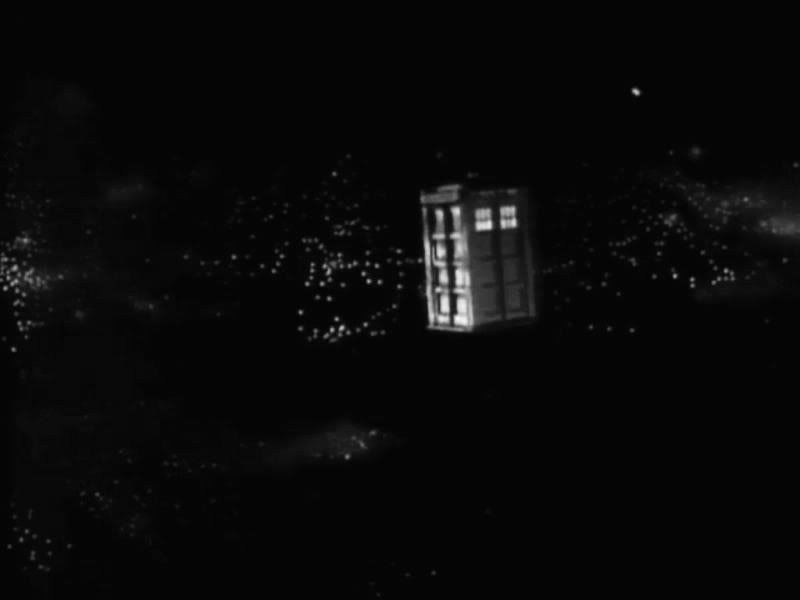
Showing posts with label Susan. Show all posts

Thursday, May 31, 2012

The Dalek Invasion of Earth


This is one of the big ones.  A sweeping, incredibly ambitious epic centering around the first return of a previous villain - and the villains who put the show on the map.  It takes everything the show learned across the first season and change and then shoots for the moon.  And it comes close enough to hitting it that it deserves to have the word "Classic" thrown at it.  There are a lot of little things wrong with The Dalek Invasion of Earth, but it gets all the big things right - and one above all that makes this the first episode of Doctor Who that truly feels fully like Who.

Tuesday, May 29, 2012

Planet of Giants


Susan: Can you get us back to normal size?
Doctor: Well, of course!  Yes, I'll try.  There's always a chance.

Monday, May 28, 2012

The Reign of Terror

Barbara: What have you done?
Ian: Oh, nothing much.


The Reign of Terror, the final story of Doctor Who's first season, introduces writer Dennis Spooner, who became the script editor for the majority of the second season, and would end up writing The Romans, The Meddling Monk, and the back half of The Daleks Master Plan, as well as contributing to the first episode of Power of the Daleks, becoming one of the best and most important figures in Doctor Who's history.  Which you never would have guessed based on his first Who script.

Friday, May 25, 2012

The Sensorites

Doctor: I think it was an exercise in fear, in power... They can control, they can frighten, yet they don't attempt to kill you.  Furthermore, they feed you and keep you alive.  Oh, this is most extraordinary!


During the course of The Sensorites, Susan comes incredibly, painfully close to working as a companion.  There are problems with how she's done here, but she just about fits, to the point that you can actually see how she could have worked.

Of course, the next serial goes and melts her wings, but we'll pretend that doesn't happen for a moment.

Tuesday, May 15, 2012

The Aztecs

Autloc: It is our law that all who attain their 52nd year shall pleasurably pass the remainder of their lives free from responsibility and care.
Doctor: Poor old souls, they must be bored to tears doing nothing.


After Marco Polo managed to weave a generally excellent yarn that seemed completely irrelevant to the show and Keys of Marinus managed to do exactly what Doctor Who should be doing and somehow failed to be good, it's strange to see Polo's John Lucarotti return to a pure historical and actually make a better Doctor Who story than Keys.  The Aztecs not only has all the rich characterizations and dialogue of Marco Polo compressed into a much more tightly-plotted and exciting adventure, but even without the crazed imagination, it manages to be a better science fiction story - and a vastly more compelling addition to Doctor Who itself - than Keys.

Saturday, May 12, 2012

The Keys of Marinus


Writer Terry Nation cleverly structures Keys as six individual mini-adventures, each with its own unique setting and challenges.  It's a saavy move that proves he really does understand Doctor Who - particularly its ability to tell absolutely any story in any setting..  And then he goes an totally misses the point he just got by not making the TARDIS crew travel by TARDIS.

But it's probably best to just take each episode individually and judge them on their own merits:


Wednesday, May 2, 2012

The Edge of Destruction

(from Pyramids of Mars)

Goodbye!   No, wait, not that one.  The other one.

My name is... was... will be... oh, tenses are difficult, aren't they?  My name isn't yet, because he hasn't made it.  Names are funny.  I like it when he calls me – will call me – Old Girl.  He doesn't even know that I’m alive, a soul at the heart of his ship. 


There's something wrong with me.  I’m an old museum piece, not always well designed.  My Fault Indicator refuses to go on because the jammed controls hurtling us into the energies of the creation of the solar system apparently aren't a "fault."  And my Thief, the one I stole to show me the universe, doesn't seem to know how I work at all.  He probably hasn't ever flown any model like me, perhaps only watched someone else fly one once.


At any rate, my Thief really isn't himself yet.  He calls himself The Doctor, yet he's not quite him just yet.  Yes, he brought home strays, as he always will, but he’s still young and lost.  He accuses them of sabotage, and threatens to throw them out to their deaths.  And while the strays stick with each other, the Young One is left confused between her loyalties.


They’re all going crazy. (The Young One actually seems oddly more comfortable and right being crazy and than when she’s normal.) I don't get these breathing things who have to do everything in some sort of order instead of existing in all time and space.


We're at the brink of disaster.  Only a few minutes before the beginning of a sun is our end.  We haven't seen enough to end.  Never to Peladon, or Karn, or Zanak.  Never to the tears of Skaro's war, of Androzani's poisons, of the Oods' sorrow and freedom.  Never to return to home that's no longer home.  Never to tell him that big, complicated word that isn't goodbye.  Oh, what is that word?

And even if we don't end, my Thief can't become my Doctor if his strays don't become his friends.

But that one with the big hair is smart.  Even as she's going crazy, she's fighting him with logic and passion.  And it's striking him.  It's... respect, perhaps?  I can see my Doctor in him.  I just have to get them to become friends and trust each other before we sail to a fiery death.

Barbara: How dare you! Do you realize, you stupid old man, that you’d have died in the Cave of Skulls if Ian hadn’t made fire for you?
Doctor: Oh, I…
Barbara: And what about what we went through against the Daleks?  Not just for us, but for you and Susan, too, and all because you tricked us into going down to the city.
Doctor: But I…
Barbara: Accuse us?  You ought to go down on your hands and knees and thank us.  But gratitude’s the last thing you’ll ever have, or any sort of common sense, either.

I'll give them a puzzle.  Melted clocks and watches, to start.  That will make sense to them.

Oh.  That made them scream.  Does that mean they understand?
Barbara: "We had time taken away from us and now it's being given back to us... because it's running out!" 
I knew the Big Hair was smart.  She even knows I'm here.


They're starting to work together.  But time is almost gone.  I have all of it, and I'm running out.  That doesn't make sense, does it?

My Thief took the other one aside and told him that he lied to the Young One and the Big Hair.  "We have five minutes only.  When the end does come, they won’t know anything about it."  Compassion.  For the first time, he has compassion.

He solved it!  My clues were perfect.  We have Time and Space for us now.

And now he's talking with the Big Hair.  He really does like her because of how she stood up to him.  They're... companions?  Is that the word?

I remembered what the word was.  He's not quite himself yet, but I can see him inside himself.  I'll say it to him anyway.


Hello, Doctor.


RATING:

* * * ½


SIDENOTES

  • After the long, slowly-paced, atmosphere-heavy seven-part Dead Planet, it's a great relief to have a short, fast-paced, atmosphere heavy two-parter.
  • Each of the two episodes had a different director, and it's interesting to see the differences.  The first episode, by Richard Martin, is the more intense and more inventively filmed, with a wide variety of camera movements and angles and more cutting than a lot of these old serials have.  It's remarkable how ambitious he was on that tiny studio, primitive equipment, and rushed schedule.  On the other hand, his episode is also full of shots falling in and out of focus, or clumsily struggling to get the right framing after moving around.  He's trying to do some great stuff, but not always pulling it off.  Frank Cox, in the second episodes, shoots and edits in a much more straightforward and less interesting manner, but he actually puts the bar low enough that he can get across it.  Both episodes, though, drip with atmosphere, thanks to the wonderful lighting and shadows in the TARDIS and the eerie background sounds and music from the Radiophonic workshop.
  • One of the few adventures the Doctor and Susan had was to "Planet Quinnis, of the 4th Universe."  I don't have any idea what that means, but it sounds fantastic.
  • Speaking of Susan, it really is fascinating how incredibly good Carole Ann Ford is when she gets to be creepy or weird.  The scene where she's threatening Ian with scissors, and then starts to maniacally stab every prop in sight is terrifying.  It's the rest of the time, when she screams and acts childish that Susan fails to work.  It's a pity most later serials concentrate so much on the latter.


  • Of course, my entire review might be reading way too much into this.  David Whitaker was a genius and way, way ahead of his time in his Who scripts, but the idea that he had thought Edge of Destruction through that much?  That he knew the TARDIS was not only alive, but had a soul, and simply didn't understand humans enough to communicate in more obvious ways?  It seems a bit more likely that he was rushed for time, and put out a seriously cool little thriller that doesn't quite make sense.

    On the other hand, Whitaker is the guy who wrote Evil of the Daleks, a brilliant Steampunk 7th Doctor story not only 20 years before McCoy and Cartmel actually came up with the 7th Doctor's defining characteristics, but 15 years before Steampunk was invented.  Heck, half a decade before Punk was a thing. He wrote The Rescue, which was not only the first episode to introduce a new companion, but did it in 50 minutes that focused on her as a character with a simple but effective plot in the background, predicting a style that wouldn't actually become the norm until 2005. And doing it better than most of the modern ones. I wouldn't put Whitaker predicting The Doctor's Wife past him.  And even if he wasn't that far ahead, he made it possible by making her alive.

Saturday, March 19, 2011

The Daleks / The Dead Planet

[1963-1964, Season 1, Serial 2]


This is where Doctor Who truly begins.  Partly, of course, because of the Daleks, the iconic villains who became the Doctor's greatest enemies, and who catapulted Doctor Who into pop culture; partly because it's this story that truly makes the show an adventure that never needs to end, that can go anywhere and be anything.

In its three hours of grim but enthralling and imaginative adventure, it's missing only one element of the show: the Doctor himself, or at least, the Doctor as we have come to know him.  But this is where he begins to become a hero - to become himself.

There are two things that make Doctor Who so special, so long-lasting, so difficult to kill: the first is the total flexibility of its format.  The second is its central character.  The Doctor is a unique creation in fiction, as fascinating and unforgettable as Sherlock Holmes, Hamlet, or Odysseus.  It takes a long time for him to reach this point; here, he's an intelligent, charismatic manipulator who does heroic things without ever quite being a hero.  He's still utterly self-centered, still has a dark edge (which never entirely leaves).  But he begins to become more than a cruel, eccentric old man who would bash a caveman's skull in simply because it's convenient.  Through the influence of two humans, a species he considers entirely inferior, he begins to see through their flawed but compelling example more than himself.  The compassion he learns from the creatures of earth that softens his darkness and ultimately comes to define him begins to take root.

Further, although his betrayal of his companions in the first episode is certainly selfish, it comes from curiosity and adventurous spirit, something that will always remain, though it will be tempered by goodness.  But already, there is clearly that passion for exploring the unknown.  This is a man who loves learning and exploring.  He also takes tremendous joy in mischievous decisions that he knows will get him in trouble.  Most of his Doctorly traits are here, without the heroism.  He does show some care for Susan, though he also unintentionally puts her in tremendous danger.

It isn't until he faces the Daleks a second time a year later, that his transformation into the fun-loving, blustering, swaggering hero, and later still, in The Power of the Daleks, that the Doctor's journey to literary eternity takes its last crucial step, when he becomes a new man and yet the same one.  But it's here that it starts.  Here, the mysterious elderly time traveler starts to become The Doctor.

And thankfully, this character development happens through the course of a damn good adventure that, for the most part, still holds up incredibly well, especially given that it's from an early '60s TV show with a budget of pocket lint.

It opens with an episode titled The Dead Planet, and like The Cave of Skulls, it's a better title than the one it's most known as.  It's a terrific, crackling 25 minutes often imitated in the show but seldom equaled.  It's almost an episode to itself; the actual plot of the serial is slowly introduced over the next two episodes.  In the meantime, the crew wander alone on what appears to be a lifeless, empty world.  Fortunately, Terry Nation fills it to the brim with fantastic concepts and ideas, and weaves in several carefully-built suspense threads that gradually but steadily escalate until the gripping final moment.  He (or, likely, script editor David Whitaker, who was always much more concerned about character than Nation) also fills it with generally strong character work for the regulars.  It's a brilliant bit of television that stands high quite apart from the exciting story it introduces.

The setting is awesome.

The Petrified Forest -- the trees are turned to stone; the "soil" is burned to sand and ashes in which no trees could have grown; there are beautiful alien flowers also turned to stone.  They come across a creature, the first monster in Doctor Who.  It's dead, but even in death, it's a fantastic creature.  In life, it was made of pliable metal, and held together with a self-made magnetic field - and, the Doctor speculates, may have pulled in its victims magnetically.


And there's also, of course, that mysterious city in the background.


Meanwhile, our heroes are slowly and unknowingly dying of radiation poisoning.  Someone unseen touches Susan on the arm; later, there are loud scraping noises, and the scraper leaves a box outside the TARDIS.  Nation, along with the production pouring its heart and soul into pulling off his concepts, creates a story that wants to engage our imaginations and really excite us.


Ian, Barbara, and Susan all want to leave before something bad happens, but the ever-curious Doctor wants nothing more than to explore that abandoned city, so he sabotages the TARDIS and insists that they have to go down to the city to get more mercury.


The empty city itself is incredibly eerie.  The distant model shot is obviously a model, but it's a beautifully-designed model.  Really good work for the time and budget.

And when they get in, the background sound is incredibly creepy. (I believe composer Tristram Cary is responsible, though I'm not certain) And then Barbara is herded away by unseen forces.  The claustrophic corridors and closing doors build the suspense until, of course, that final shot, which isn't scary because of what we see; it's scary because what on earth could be on the other side of that thing that would scare Barbara that much...


The next episode, wisely, keeps us from seeing them for several more minutes as the characters get weaker and weaker, and learn that they are dying of radiation, so the alien threat is that much more menacing.  The design of the Daleks is wonderfully alien: not a "bug-eyed monster" or any kind of monster you ever really get a good look at.  Instead, they're this one-of-a-kind metal casing with a plunger for one arm and a very high-powered gun in the other.  Terry Nation ended up with full credit for the Daleks, but it's designer Raymond Cusick who created the elements that made them so iconic and unforgettable.  Not to take away from Nation's achievement - he creates effectively frightening villains.  But Cusick deserves just as much credit. 

Their electronic voices simply add another element to that fact that there is nothing remotely human about them.


But they're also intriguing.  They're scared.  Even when they drag out the Doctor to interrogate him, and he's not the Doctor we know but just a weak old man barely clinging to life, they still act like he could somehow attack them at any moment.  Still, what really brings them to vivid life is the stunning design work, the creepy voices, and the performers inside the Daleks, who do a great job of convincing us that there really is something alive in there, and give a lot of energy to scenes that could have been deadly dull.

They tell their prisoners a story about the war that ravaged their planet, ending in an exchange the Doctor assumes to have been from a neutron bomb.  The Daleks, then known as the Kaleds, had fought a people called the Thals, who apparently are still alive.  In fact, the Daleks assume the travelers to be Thals because they can't conceive of any life outside their own planet.

The prisoners realize that the mysterious box left to them must have been anti-radiation drugs left by the Thals; the Daleks let Susan run to the TARDIS to get them.  This leads to the second cliffhanger, which is an incredibly effective low-key piece leaving us in genuine suspense.


Then the Thals show up, and they turn out to be the main element that doesn't work.  The Daleks are horribly mutated inside their shells; the Thals turn out to look like humans.

The first distant planet they go to, and the creatures look like humans.  Not only that, but in a story where the villains are essentially space Nazis, the regular people are blond haired blue-eyed hunks.  And then Susan goes and says, "You're perfect!" in regards to their appearance.  Compared to our complex protagonists and the fascinating Daleks, the Thals just aren't that interesting except for just how off it feels for the Space Nazi's nemeses to be Aryan Adonises.  The actors do what they can, but they're pretty dull.


But the actors are good enough and they're generally used well enough that even though none of them have a whole lot of individuality, they work well enough.  Susan returns, and while the Daleks send a message to the Thals that they want peace, the protagonists prepare their daring escape.  This extended segment, comprising second half of episode three and much of episode four, is excellent; the meticulous details of the escape make it much more thrilling when they do get out.  And further, although they do some fooling of the Daleks, the Daleks aren't made to be stupid; I love that when our heroes come up with an elaborate plan to make their destruction of the camera in their cell appear to be an accident, the Daleks immediately decide it was intentional.  It's an exciting, well-constructed scene that builds to the meeting between the Thals and the Daleks.

Of course, the Daleks turn out to have only one true motive: survival at the cost of every other species in existence.  The peace treaty is an an ambush; Ian tries desperately to warn them, to no avail.  After all the build-up, the Daleks' actual use of their weapons is really shocking.  They fire, the screen turns to a negative, and their targets fall over dead.


There's also this awesome shot of their guns boiling the walls when they miss.  Why didn't the series ever use that again?

After that, our heroes return to the TARDIS.  The Thals talk about trying to make peace anyway or just run because pacifism is all they know.  Ian tries to convince them that in this case, against these enemies bent on nothing less than extermination, fighting is the only way to survive, the only thing to do.  The Thals graciously thank him for trying to help, but decide to keep to their ways.  The travelers sadly turn to their ship, deciding to go on and leave this hopeless situation alone.

... and then they realize the Daleks took the fluid link the Doctor pretended was empty back in the city.  Meaning that now, it really is keeping them from leaving the planet.  What follows is really interesting: Barbara tells Ian that the only way for them to get home is to convince the Thals to fight.  Ian protests that he won't ask them to fight for them.  It's an interesting reversal of expectations - Barbara is generally the heart of the group, the kindest one, but here, she's pragmatic and selfish.  Of course, this early Doctor is much worse, telling Susan that this is no time for morals.  The following debate is really interesting:

Ian: I will not have anyone's death on my conscience!

Barabara: Except mine, and Susan's, and the Doctor's?

It's interesting that Ian, the most heroic and physical of the group (albeit reluctantly) is the advocate for peace.  Susan argues that they should convince the Thals to help themselves by fighting the Daleks, which Ian starts to agree to, which Barbara follows with a cold, "You're just playing with words."  At any rate, the travelers decide that they should get the Thals to attack the city.  This is an interesting moral quandary, and the protagonists arguably make the wrong choice, but both sides are really weighed.  It's very interesting and unusual for what is, plotwise, a fairly straightforward action piece, to really take the time with this sort of thing, and then send the heroes down what may be the wrong path.  And except for the Doctor, they sort of suspect that it's the wrong path, but convince themselves otherwise very credibly.  Ian finally makes his decision by seeing if the Thals truly are completely against fighting in principle, or if there is some level of fear and cowardice.  Very interesting, very unusual.

The rest of the story concerns the strategy of attack, the journey to the Dalek city, and finally, the climactic battle between Thal and Dalek.

The plot isn't the most original, nor does it seem on the surface that it could fill seven 25-minute episode, but it works because Nation fills it with details.  He spends five minutes on the characters finding they need to cross a gap, and figuring out how to get across.  Of course, it could have been done with a quick rope thrown across and a bit of swinging, but Nation instead delves into exactly how they get across, and because he does it so convincingly, the danger is much more real.  He also makes it into a good cliffhanger sequence, ending episode six on this bit, with one of the Thals dangling over the cliff - and then, in a genuine surprise, having him drop to his death at the beginning of the next episode.
 

The adventure to the city goes on a bit, but when they get there, it is a satisfying climax, with moments of action, suspense, horror, heroism, and sacrifice.

The character work of the four regulars is strong throughout the story.  They begin to settle into their roles -- Ian, the reluctant action hero; the Doctor, the clever manipulator; Barbara, the kind heart of the show; and Susan, the... well, by the end, she's pretty much just the person to get captured and need rescuing, which, unfortunately, is pretty much the sum total of her characterization for the rest of her time (with a couple notable exceptions).  But Carole Ann Ford does a terrific job with what she's given.  The other three are just as exemplary. 

But she really deserved better material.  That's great physical acting there.

All in all, The Daleks gets the series off to a strong start with a compelling adventure, well written and well detailed, and introduces a fantastic set of villains who, thankfully, will return...


RATING:

* * * ½ 


  • I love the scene where the Daleks cold-heartedly test whether or not they can survive without radiation by subjecting one of their own to the treatment.  It really drives home their madness, of course, but it also has the Dalek yelling for help, making it just a little more three-dimensional and compelling.  I have to say, though, it's also incredibly satisfying to see the Daleks suffering.  And the concept of creatures who have evolved to depend on the very radiation that kills other species is a fascinating one.


  • But more than that, I love the Dalek begging the Doctor to let them live, and not commit genocide against the genociders.  The Doctor stands by and lets them die, but Hartnell's delivery of the line, "Even if I wanted to, I don't know how," lends a lot of extra depth.  It's a powerful sequence.
  • One character moment I really like: Susan finds a petrified flower she finds quite beautiful.  Ian kindly helps her to very carefully pull it out, being very gentle.  Then Barbara calls for help, and without realizing what he's doing, he crushes the flower in Susan's hand and runs off, leaving Susan alone with the debris.


  • One thing that all Doctor Who productions should have learned from this is that the Daleks should never have lengthy dialogue scenes, and definitely should not monologue.  Those voices are creepy, yes, but too much talking and they just get really, really annoying.  Unfortunately, it not only continued through the 60s, but bled into the 70s.  And showing up in Victory of the Daleks last year, which was pretty much just one long Dalek monologue after a good first third, is just unforgivable.


Sunday, March 13, 2011

An Unearthly Child/The Cave of Skulls

[1963, Season 1, Episodes 1-4]


“Nothing about this girl makes sense...”


Susan Foreman is a strange girl.  Two of her teachers, Ian Chesterton and Barbara Wright, wonder together just what it is that makes her so odd.  Her intelligence is stunning in many ways, and Ian’s science experiments and Barbara’s history lessons are child’s play to her.  But she’s also completely lost in other, seemingly simple matters.  When Ian asks her to solve a problem with three variables, she insists that the problem can’t be solved without five, because you can’t approach the world without seeing all five dimensions.  In Barbara’s class, she doesn't know how many shillings were in a pound, and claims she had forgotten that Britain hadn’t changed to the decimal system yet.

It gets stranger when Barbara tries to meet her mysterious grandfather, and finds that the address listed by the school is just an abandoned junkyard.


Ian and Barbara, obviously close friends, decide to follow her home to try to figure out just what, exactly, is up with her.  They follow her to the junkyard.  Inside, they don’t find her, but they do find a police box for some reason.  Soon after, an odd old man comes in.  They confront him and figure out quickly that he is Susan’s grandfather.  He acts very suspicious, even sinister.


Then they hear Susan’s voice coming from inside the police box.  They rush inside to find a gigantic, otherworldly room inside the small box.  The old man locks them inside and tells them that it is his ship that travels through space and time.  Susan confirms it.  Barbara and especially Ian are extremely skeptical.  Then the old man decides that they can’t leave, and will have to travel with him.  And thus he kidnaps them out of their own time and their own world, and off to strange new adventures…


The first ever Doctor Who episode opens with an amazing theme song. Ron Grainer composed an eerie, minor-key melody, countered by a major-key bridge and driven by a pulsing bassline. But Dellia Derbyshire's arrangement, produced electronically, but sounding nothing like a synthesized score, creates an utterly unique, mysterious sound with a sinister but melodic theme.  And the title sequence matches it for mysterious strangeness.


An Unearthly Child drips with atmosphere from the opening shot.  The camera is mobile and lively, but slow enough to never be distracting.  The direction, camerawork, and lighting are superb.

But the script is equally strong.  It’s tight, well-structured, character-driven science fiction of the highest order.
Ian and Barbara are the focus of the episode, and they’re exceedingly well developed without slowing down the plot.  A bit old fashioned, likable, and engaging, they seem like good teachers.  It’s also obvious in the performances by William Russell and Jacqueline Hill that they’re close friends.

Very close...

 Their following Susan home comes across as somewhat mischievious curiosity.  Barbara wonders if they really should be following her, even though it was her idea, but Ian dismisses it because it is a mystery they really do want an answer to.


Susan, the titular unearthly child, is every bit as interesting.  Carole Ann Ford seems very relatable and likable, but there is something strange and otherworldly about her.


But William Hartnell as The Doctor, despite not appearing until halfway through the story, walks away with the episode.  He’s grippingly charismatic and absolutely fascinating.  He’s also an eerie, threatening figure; even the way he holds his flashlight is somehow threatening.  It’s a terrific performance.


The first two-thirds of the story masterfully build mystery and interest, but the really impressive part is the final third, when they go inside the ship.  The revelation is even more interesting than the mysteries.  Inside, the drama and intensity builds superbly, enhanced by the brilliant hum of the ship.

"The point is not whether you understand.  What is going to happen to you?"


The TARDIS interior is an amazing piece of work - it really does seem like nothing on earth.  It's not futuristic so much as completely otherworldly.  None of the subsequent redesigns have matched the sheer impact of this initial version. (although the Eighth Doctor's is pretty impressive)

The Doctor shows more and more layers while still remaining completely mysterious.

            Ian: You’re treating us like children!

            Doctor: Am I?  The children of my civilization would be insulted.

            Ian: Your civilization?
Doctor: Yes, my civilization.  I tolerate this century, but I don’t enjoy it.  Have you ever though what it’s like to be wanderers in the fourth dimension?  Have you?  To be exiles…  Susan and I are cut off from our own planet, without protection.  But one day, we shall get back.  Yes, one day… one day…

Ian and Barbara’s incredulous reaction to all this is completely credible.  Susan tells them, “I was born in another time, on another world.”  They don’t believe her, either, understandably, even seeing the wonders of the TARDIS.


When the Doctor tries to kidnap the teachers, Susan’s response is firm:

            Susan: I won’t go!  I’d rather be in the 20th century than in the TARDIS with you!

            Doctor: Now you’re being sentimental and childish.

            Susan: No, I mean it!

            Doctor: Very well.

But he ignores her instead, flying into the unknown.

An Unearthly Child’s 25 minutes are stunning – introducing four characters with incredible depth, introducing the concepts and premise of the show, and above all, telling a tense, tight, exciting story.


The general consensus on the first four-part serial is that the first part is great, and the rest is rubbish.  It’s an understandable reaction, though it has more to do with the far the drop in quality than the actual merits of the next three episodes.  Still, The Cave of Skulls, despite one of the coolest titles ever, is certainly lacking in many respects, and its two successors, The Forest of Fear and The Firemaker, don’t pick up the slack.  It’s a different plot entirely, although it certainly follows very directly from Unearthly Child and reflects it in interesting ways.  But all in all, it’s a different story, and I’m going to treat it as such in my ratings because this is my website, dammit.

This three-part tale, which I’m going to refer to overall as The Cave of Skulls because that title is way too cool to not say as many times as possible, concerns a tribe of cavemen on an unnamed planet struggling to survive without fire.  There was a man who used to know how to use it, but the knowledge was lost when he was killed.  His son, Za, is obsessed by the notion that if his father knew it, he can learn it.  Za is leader of his tribe, but the elders are increasingly impressed by the stranger Kal, who has been providing meat to the tribe daily, while Za only tries without success to make fire.  This power struggle is thrown wildly out of whack when four bizarre people come in a large blue box, and throw great confusion into the midst.

Did I mention there's a cave with skulls in it?

Cavemen are rarely depicted convincingly in movies and television.  And by “rarely,” I mean Quest For Fire and that’s it.  Almost every other attempt goes for b-movie silliness, and only delivers on occasion.  The second-best caveman film is probably One Million BC on virtue of a couple minutes of Harryhousan effects and Raquel Welch in a bikini in virtually every scene.

Quest For Fire is different: it takes it seriously, and sets out to tell an engaging story while capturing the grim realities of its setting.  Unlike a few other serious attempts at the subject (like, say, Clan of the Cavebear), it doesn’t compromise with laughably-written attempts at feminism (or the 1980s Hollywood version) or outrageousness: it commits fully to its ideals, and the strength of its convictions make it a funny, exciting, and fascinating epic. (Since writing this, I've seen Fred Schepisi's terrific Iceman, which makes two good cavemen movies.)

Cave of Skulls, despite being what was intended as a children’s show, aims for the same goal: a grim, gritty, realistic vision of horrific times.  And, given the agonizingly low budget, it does a good job.  The sets are small but atmospheric, the costumes simple but effective.


The plot itself, though… the plot is a political struggle between two incredibly simpleminded idiots, with political intrigue provided by other simpleminded people.  Within about two minutes, every possible avenue they can think of is used up.  The story, unfortunately, takes over an hour to unfurl.  The setting may be well-established, but that doesn’t make it terribly interesting.

What is interesting, however, is the characterization of the Doctor, Ian, and Barbara.  Ian and Barbara react very convincingly to the strange world they’ve been dropped into.  Even after the TARDIS lands and they see the other world on the monitor, Ian still isn’t convinced, not until the Doctor leads him outside.  After finding his footing in this new world, though, Ian still stands up to the Doctor without hesitation.  He’s willing to call the Doctor the “tribe leader”, but for the most part, he takes charge.  He also insists on helping a wounded caveman, even though the caveman was wounded following them.  He’s the hero of the group, and William Russell does a great job of it.


Barbara doesn’t show the same strength, but Jacqueline Hill’s performance is superb.  Her expression of fear is totally convincing.  Further, though, there’s a strength in her fear: she’s scared, yes, but she’s also trying as hard as she can to not fall apart.  Even better is her telling off of the Doctor late in Forest of Fear, when he callously wonders why they would consider helping a wounded enemy.


Most fascinating, however, is the Doctor.  After laughing at Ian and Barbara for being, to him, part of a backwards civilization, he’s dropped into a world far less civilized, and captured and at the edge of death, he finds himself defeated by a people who can’t even manage to light a fire.  He begins begging for his life, saying he’s merely an old man, then offering to give these people the secret of fire before realizing that he dropped his matches.  It’s only when the other three show up to save him that he begins to become effectively manipulative, saving Ian’s life by telling the savages that he will not give them fire if they kill the young man.  It’s not out of compassion, however; he simply sees Ian as a means to escape.  In this first story, the Doctor is a cold, dark figure, willing to kill a helpless, wounded caveman with a rock simply because it seems expedient to him.

It’s here that a crucial piece of character development begins for the Doctor: Ian and Barbara insist on compassion and mercy.  These two traits over the years come to define the Doctor; that he learns the traits from two humans, the first two he really knew, makes his love for the planet Earth totally clear.  It’s never been said explicitely, and doesn’t have to be; it’s crystal clear, right here, where he begins his journey into the complex hero he would become.
 
Not that he becomes a hero in this story, or even comes close; but the beginnings are here.  Still, what does become obvious is his intelligence and skilled manipulations.  The beginning of episode four has a brilliant sequence where he tricks Kal into admitting his murderous activities.  It’s impressive not because of who he tricks, since Kal isn’t exactly one of the more intelligent forms of sentient life out there, and could probably be outsmarted by a rock.  It’s impressive because of the immediacy of the Doctor’s actions: the very moment Kal shows a weakness, the Doctor knows exactly how to trick him, and does it with stunning efficiency and coldness.  It’s a thrilling, sensational sequence; he may be tricking an idiot, but he’s doing a magnificent job of it.
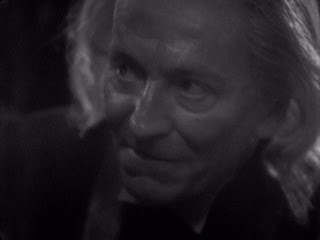
The picture next to "cunning" in the dictionary.

Hartnell’s performance is astounding throughout.  The Doctor may not be likable at the beginning of his travels – at times, he’s downright detestable – but Hartnell’s presence and charisma are enrapturing.  Masterful, gripping work by a brilliant actor.

These relationships are also well-established.  By the end, Ian and Barbara are, by necessity, part of the crew, and they are beginning to show how they contribute to the team.  Ian and the Doctor, for all their clashing, are able by the end to work together during dangerous situations.  It’s solid television writing.

Susan, unfortunately, doesn’t fare as well as the other three.  She does bravely charge into the tribe to save her grandfather, but her freak-out when she first sees that he’s missing is a bit much, and she spends most of the story screaming and cowering in fear.  While fear is understandable, she brings it a bit too far.  It seems perhaps she was right to want to stay in the relative safety of the 20th century.  All in all, she doesn’t get much here beyond “the Doctor’s granddaughter.”  Still, Carole Ann Ford remains likable.

The Cave of Skulls has one great strength, and that’s in the characterization of three of the four leads, which is compelling throughout.  The main story is slow and dull, but it’s a backdrop, really, to the continuing development of Ian, Barbara, and the enigmatic Doctor.  That and the compellingly-captured setting are enough, in my mind, to give it a weak three stars.


An Unearthly Child, on the other hand, is one of the series’ greatest achievements, reaching a peak only a handful of stories in the entire half-century history of Who can reach.

RATINGS:
An Unearthly Child:    * * * *
The Cave of Skulls:     * * *


·        The DVD contains a fascinating extra: the original unaired version of An Unearthly Child.  On the whole, it’s not as good as the actual version, but the differences are interesting.  There are some odd little changes to the title theme, and the opening shot on the whole is less effective.  But one of the biggest differences is immediate almost immediately: the relationship between Ian and Barbara.  Rather than a strong, relaxed friendship, they seem more like professionals, which makes their actions much less explicable.  William Russell and Jacqueline Hill are still clearly good actors, but they aren’t nearly as good in the role as they are in the aired version; it’s as though between showings, they got to know each other better, and the friendliness showed through, enhancing their own character work as well.  The banter and performances are still good, but they just aren’t anywhere near as sharp, and they flub lines like Hartnell in some of his later episodes.

The camerawork and lighting, while still well-designed, are pretty clumsy.  I like the ambition in the roving camera, but it’s really struggling to hit its marks, and it doesn’t really gel until the last few minutes.  It’s also very strange to hear such different sounds coming out of the TARDIS.

There are two differences, though, that make some Whovians actually prefer this version.  The first is Hartnell’s portrayal.  He’s pretty threatening in the aired version, but here he plays the role like one of the gangsters that were his bread and butter in his pre-Who days.  It’s outright villainous, and it’s hard to believe this man could ever have evolved into the compassionate figure he became.  I like Hartnell when he’s being threatening, but I find this to be a little be too much, personally.  Still, it certainly makes for a very different interpretation.

The other element is Susan.  Carole Ann Ford plays her otherwordliness to a much further extreme.  She doesn’t just seem unearthly; she’s from a different universe.  It’s actually pretty creepy.  “I like walking home in the English fog,” is a wonderfully odd line anyway, but Ford’s delivery is incredibly unnerving.  Instead of looking at a book about the French Revolution and criticizing its inaccuracy, she creates a rorschach test, then destroys it for some reason; it’s a moment riveting in its strangeness.

After all her weirdness, her cries of “Grandfather, let them go!” near the end, as she sheds the inhuman bizarrities and becomes much more relatable, have a tremendous effect.  Ford’s performance here is astounding.  It’s a tragedy she wasn’t allowed to play Susan this way.

Also, her costume is awesome.

Other than Susan, though, I don’t think the Pilot version works terribly well.  The technical areas are much rougher, the reveal of the inside of the TARDIS isn’t as shocking, and the less interesting Russell and Hill performances make it a lot less involving.  But it definitely makes for a fascinating watch.

If you haven’t seen the story before, when you get a hold of the DVD, don’t use the “Play All” feature, which includes the pilot version; go to the episode selection, and go through the story that way, then check out the Pilot version later if you’re interested.  It’s certainly worth a look, but on balance, it isn’t really the superior version, and even for this show, it’s wildly out of continuity with the series overall.  But its version of Susan is fantastic.

·        The later three-episode arc is variously known as “The Tribe of Gum”, “100,000 BC”, “The Paleolithic Age”, “The Stone Age”, and generally with its predecessor as “An Unearthly Child.”  I stick by “Cave of Skulls”, and hope very deeply to start a trend in Dr. Who fandom.  Spread the word!

·        Incidentally, the German version of the novelization is translated as “Doctor Who and the Child From the Stars”, which is itself a pretty cool title.  The French version, on the other hand, translates as the uninspiring “Doctor Who Takes the Stage.”

·        The cliffhangers are strong in all four episodes.  The howling wind and eerie visual of the ancient world in one is hard to top, but the skulls in the second and the spear-wielding tribe in the third are excellent, as well.  The final one, though, really is the best, a simple camera move on a small detail that’s more gripping than the entire three episodes that preceeded it, and that propels them into their next adventure, where the show really begins…


See this, series?  This is how you do a cliffhanger.