Thursday, February 17, 2011

The Ribos Operation

[1978 – Season 16, Serial 1]
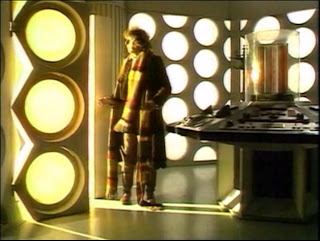
The early Doctor Who stories were in the form of Serials – feature-lenth stories spread over several episodes.  By the ‘70s, four 25-minute parts were generally found to be optimal: enough time for substantial character development and plotting, not (usually) enough time to get boring.  Now, in his second season as producer, Graham Williams was eager to make a mark on the series besides “not as good as the last two guys,” and tried for a novel, ambitious idea: interlinking an entire season of serials into one massive, epic story.  Of course, today, there’s nothing special about the notion, but it was pretty impressively original at the time.

The story: The Doctor is confronted by the White Guardian – a stunningly powerful being whose power dwarfs even that of the Time Lords.  The Guardian sends him on a mission: gather the six pieces of the Key To Time, which will enable him to keep the universe from falling into chaos.  The pieces have disguised themselves into all manor of objects, but will be given a way to find the objects and return them to their original state.  He would be aided in this quest by a fellow Time Lord, Romana, and would be opposed by the unknown forces of the Black Guardian.  It was an epic idea, and for a while, it played out very well.  In the end, it never came to a satisfying conclusion, and the format wouldn’t be tried again for nearly a decade, but it certainly started with a bang.

For the first episode, The Ribos Operation, Williams turned to former script editor Robert Holmes.  Holmes is rightly regarded as the best writer of Doctor Who’s classic era, having written or co-written among others Spearhead in Space, Carnival of Monsters, Pyramids of Mars, The Brain of Morbius, The Talons of Weng-Chiang, and The Caves of Androzani, and this lives up to his reputation.

The opening appearance of the White Guardian, however, was written by Williams and script editor Anthony Read, and it is itself an excellent opening.  The TARDIS is taken off-course and its doors forced open with incredible ease, after which the Doctor walks out to the world he’s been brought to…

Which isn’t exactly expected.  In fact, the quiet underplaying of the White Guardian visually and performance-wise contrasted with mind-boggling things he says rather casually:

Doctor: Ah!  You want me to volunteer, is that it?
White Guardian: Precisely.
Doctor:  And if I don’t?
White Guardian: Nothing.
Doctor: Nothing?  You mean nothing will happen to me?
White Guardian: Nothing at all.  Ever.

After that, we meet Romanadvoratrelunder, a name the Doctor shortens over protest to Romana.
Romana turns out to be one of the Doctor’s greatest companions, not least because, as a fellow Time Lord, she every bit as intelligent (or at least very nearly) as the Doctor himself.  It’s a blast to watch her wittily deflate the Doctor like no one else could.  Mary Tamm plays her with both great humor and regality, and her dialogue with the Doctor is one of the highlights of this story.

            Romana: What would you like me to do?
Doctor: I’d like you to stay out of my way as much as possible.  I don’t suppose you can make tea?
Romana: Tea?
Doctor: No, no, I don’t suppose you can.  They don’t teach you anything useful at the academy, do they?
Romana: It’s funny, before I met you, I was even willing to be impressed.
Doctor: Indeed?
Romana: Oh, yes.  Of course, now, I realize that your behavior comes from a sub transitory experiential hypertoid induced condition aggravated I expect by multi- and cathelogical tensions.
Doctor: … what’s that supposed to mean?
Romana: Well, to put it very simply, Doctor, you’re suffering from a massive confrontation syndrome.
Doctor: Is that the sort of rubbish they’re pouring into you at the academy?
Romana: You know, I might even use your case in my thesis when I get back.
Doctor: I’ll call you “Romana.”
Romana: I don’t like Romana.
Doctor: It’s either Romana or Fred.
Romana: All right, call me Fred.
Doctor: Good.  Come on, Romana.

But in a Robert Holmes script, dialogue is a highlight throughout, no matter who’s talking.  It’s a joy simply to listen to the people talking, regardless of plot.  It’s also got Holmes’s trademark double acts – the Doctor & Romana, of course, but also Garron and Ustoffe, a truly hilarious pair of conmen, and Graff Vynda K and Sholakh as the villain and his second-in-command.  Graff Vynda-K is a particularly noteworthy character.  Even though he’s enjoyably evil, he’s superbly fleshed out and totally three-dimensional.
Graff Vynda-K and Sholakh

The Ribos Operation takes place on a world stuck in its own dark ages.  Intergalactic conmen Garron and Ustoffe are attempting to sell it to Graff Vynda-K, an exiled tyrant of another planet.  The planet should be worthless to the Graff, but Garron and Ustoffe are trying to convince him that it’s actually rich in Jethrik, the most valuable mineral in the galaxy, even though the only Jethrik on the planet is a large slab Garron and Ustoffe themselves brought there.  Into this mix enter the Doctor and Romana, who realize the first piece of the Key is, in fact, the piece of Jethrik the two cons are carrying about.
Garron and Ustoffe

This being a story of cons, things get bad quickly, and a vengeful Graff Vinda-K attempts to execute them all, assuming the Doctor and Romana are with the cons.

Graff Vinda-K: [to Garron] Get up, you cringing cur!
Doctor: Uh, yes, get up, you cringing cur!
Garron: Oh, just, ah, taking my friends for a little stroll.
Graff Vinda-K: Don’t lie to me! [moves to hit Garron]
Doctor: Don’t hurt the cringing cur!

It’s an engaging yarn, filled to the brim with double-crosses and witty exchanges, but the best part of the story is only barely connected to the plot, and that’s the character of Binro.  Binro is an outcast on the world of Ribos for believing that Ribos orbits a star.  His story adds a remarkable emotional power to the story, and through him Holmes fleshes out the world of Ribos more than all manor of technical wizardry ever could.
It’s a terrific, crackling script throughout.  Holmes even knows how to use K-9 effectively.  I like K-9, but he’s an exceedingly difficult character to use effectively.  Holmes nails it, keeping him convincingly out of the action for the first two-thirds, and using him nicely in the last.

The only real flaws come from the production and one of the actors.  Director George Spenton-Foster does a terrific job staging a dialogue-heavy story, giving it plenty of energy.  The entire story is shot on rather small interior sets, but they’re excellent sets, if a bit tight.  The costumes are spectacular.  The only real issues are the monster who rear their rubbery head briefly.  Both are pretty cheap, unimpressive monster.  Fortunately, each of them only have a small part to play in the story, and Spenton-Foster minimizes their screen time.

Most of the performances are sterling.  Unfortunately, the one occasional weak link is the Doctor himself, Tom Baker.  Oh, he’s a great Doctor, when he’s good in Ribos Operation, he’s spectacular.  But this was his fifth season as the Doctor, and in some of his later performances, he tended to overplay the comedy he loved so much, letting it bleed into scenes that required seriousness.  This isn’t nearly as bad as it would get in the next season on a few occasions, but Tom’s shenanigans turn a couple of major dramatic scenes into a cartoonish slapstick routine.  He’s ever so much funnier when he reads his funny lines seriously.  Fortunately, only a few scenes suffer from his unfortunate tendancies; most of Ribos is blessed with Tom at his most magnificent.

The Ribos Operation is a strong start to an ambitious season, and furthermore, it’s an excellent stand alone story.  Fantastic characterizations, brilliant dialogue, and an intriguing world, set in an exciting story that builds to a great climax.  One of the classics.
 
RATING:
* * * ½


SIDENOTES:
·        Cyril Luckham’s performance as the White Guardian really is wonderful.  He underplays it beautifully, as though the Guardian isn’t really concerned with the universe plunging into chaos.  It’s just another day on the job.  It makes it much more convincing and mind-blowing than a more obviously “mystical” reading or more over-the-top portrayals (as future appearances of the Guardians proved).  His reading of “Beware,” as though it’s slightly amusing to him, is a great exit.
·        The difference between “Bad Tom” and “Good Tom” are actually pretty subtle in pictures, but unmistakable when watching.  Nonetheless, I tried to capture it.  First, Bad Tom, from the cliffhanger in episode 2, where his face actually ruins the Graff ordering his execution.

And now, Good Tom, from the scene where Garron tells him the background of Graff:

It’s really hard to show in a still, but Baker’s intensity add tremendously to the sequence.  His face raises the scene from good exposition and background to gripping and powerful.  That’s one of the reasons Season 12 felt so promising, even when it dropped to junk like Revenge of the Cybermen: it was an entire season of Good Tom, and Good Tom is magnificent.


Wednesday, February 16, 2011

The Brain of Morbius

[1976 – Season 14, Serial 5]
One issue with science fiction, fantasy, and horror is that while it opens up every door possible to the imagination, there is a very fine line between compellingly imaginative and hilariously silly.  The Brain of Morbius takes that line, laughs at it, and dances all over and around it with unrestrained glee.  It’s dark, and tragic, and powerful, and intense, and goofy, and ridiculous, and wildly over-the-top, and horrific, all at the same time.  And somehow, it not only works, but transcends itself into something brilliant and special.

The Doctor and Sarah Jane arrive on Karn, a planet not far from the Doctor’s home planet of Gallifry.  They soon encounter not only the Sisterhood, a mystical band of women guarding the secret of immortality, but also an ingenius but warped scientist named Dr. Victor Frankenstein Dr. Solon and his hunchbacked, hook-handed assistant Fritz Condo.  Solon has in his possession the brain of the evil Time Lord Morbius, and is rebuilding a body for him.  And he thinks the Doctor has the perfect head…

The original script was written by Terrance Dicks, then overhauled by script editor Robert Holmes, and the result is a script from two of the greatest writers in the history of Doctor Who.  The characters are terrific.  Dr. Solon and Morbius are both an incredibly rare breed of villain: wildly overblown caricatures with “take over the universe” sorts of ambitions who are also complex, well-shaded characters.  There’s just enough element of tragedy to make them interesting, but not so much that we regret their fates.  Condo is, of course, a dumb brute, but he’s a dumb brute with emotional depth.  The Sisterhood is a fascinating group whose obsession with immortality has frozen their culture in time.  Without death and birth, they can never move forward.

But the highlights are the two regulars.  Tom Baker’s Doctor is at his peak.  He is, of course, hysterically funny.  I love the scene when they first march up to Solon’s castle in the rain.  When Solon opens the door, they’re absolutely drenched as it practically monsoons outside.  The Doctor’s greeting: “Can you spare a glass of water?”  But he’s also very serious when called on, and with his deep voice and large frame, Baker has an unbeatable presence when solemn.  His concern for Sarah Jane, his solving of the dying flame with science, and his climactic showdown with Morbius knowing he’ll probably die in the process are all fantastic moments.

Sarah has plenty to do herself.  I love her cleverness when Solon gives them drinks.  But even more than that I love her bravery throughout; even though she’s blinded through most of the story, she shows incredible courage, even wandering outside on an unfamiliar planet to try to warn the Doctor of what’s coming.

And their relationship is beautifully portrayed.  Even though Sarah is just a human to the Doctor’s Time Lord, he treats her as a genuine equal.  Further, they’re just fun to watch.  There’s a great dialogue between them early on as the Doctor yells at the skies, convinced that the Time Lords are manipulated events and trying to get him to do their dirty work for them (though I love that it’s never stated for certain whether or not they did, implied as it may be), while Sarah teases him for being so childish about it.

Meanwhile, this is all set in a wonderful atmosphere.  The sets are stunning; Solon’s laboratory is a masterpiece.  Director Christopher Barry shoots it brilliantly throughout; it’s a tremendously well-lit, well-shot story.  He also plays the suspense for all it’s worth and layers in plenty of eerie horror and violence.

So it’s a compelling, dramatically sound character-driven adventure with great touches of horror, but there are also strong elements of satire, black comedy, and just outright silliness.  Probably one of the best examples of this oddness comes when Solon and Condo fight, during which Morbius’s brain is knocked to the ground.  Solon tries desperately to save it by putting it in a plastic case with long eyestalks.  However, the brain is damaged, and for a while, it runs around in a highly primitive fashion, wanted nothing but to kill.  The incredibly intelligent Time Lord reduced to his savage nature.

It’s also a brain sliding around on the floor, then put in a plastic head on top of a body that looks like this:

The first time I watched this episode, I was thrown by the last third, starting with the brain going on the ground, because while it worked, it couldn’t be taken totally seriously.  But rewatching I realized that it could be taken very seriously.  It's played straight enough and with enough depth to work as horror adventure.  It just has to be taken humourously as well.  

This is a brilliant episode, and one I love more each time I watch it.  It’s great fun, layered with intelligent, wit, and wonderful characters.  And it’s all that in ways uniquely Doctor Who.

RATING: 
* * * *


SIDENOTES

  • [Added: 6/27/11] I just finally watched Bride of Frankenstein.  That description of it as simultaneously funny, dramatic, and scary?  Very much like Bride, albeit leaning a bit more on the drama and horror scales than its '30s forebear.

Tuesday, February 15, 2011

Vengeance On Varos

[1985 – Season 22, Serial 2]
 
[NOTE FROM THE FUTURE - A decade after I wrote this, I added an addendum that may have gone on longer than this original entry.]
 
Doctor Who weathered more than its share of controversy in the ‘70s and ‘80s, mostly from one Mary Whitehouse, an ultra-conservative Christian of the sort that gives the rest of us a bad name.  She thought television was becoming far too permissive and showing horrible, awful things that would corrupt children and even older viewers.  It’s worth pointing out that she wasn’t talking about Torchwood, where I might be tempted to concede the point, but about television programs from 1963.  I don’t know, maybe the BBC was showing some pretty racy, violent stuff in ’63, but in America at least, about the most offensive thing you could find was the highly realistic black eye makeup on Opie Taylor when he got beaten up by a bully. 

Anyway, when the ‘70s rolled around, she singled out Doctor Who as “teatime brutality for tots,” a phrase I find highly offensive in suggesting that the rest of us don’t like a little teatime brutality.  She went on to claim that it “contains some of the sickest, most horrible material.”  Eventually, the BBC started to listen to her, and censored the cliffhanger to episode 3 of The Deadly Assassin, where the Doctor, in a fight with an assassin who, strangely enough, could be described as “deadly,” was held underwater to be drowned.  Later, producer Graham Williams had to severely tone down the horror and violence in the show under Whitehouse’s influence.

In the mid-‘80s, under the script editing of Eric Saward, controversy arose yet again over the violence.  But this time, it wasn’t just Whitehouse and her followers: even many Doctor Who fans complained about the high levels of nastiness that was beginning to seep in.  In Attack of the Cybermen, a mercenary got his hands cut off (off-screen, of course, but nonetheless pretty nasty).  Vengeance on Varos was even more criticized, and it remains one of the most controversial of all Doctor Who episodes, and raises the question of just what is “too far”.

Vengeance certainly is one of the darkest, grimmest, and nastiest of all Doctor Who episodes.  Its depictions of violence are painful, it’s atmosphere deeply oppressive, its humor pitch-black.  It's also one of the most vividly captured planets of the mid-eighties.


The question is whether or not that’s a bad thing.  Some fans hate Vengeance with a, um, vengeance.  Others admire just how strongly it holds to its convictions..

And other than the writing for the Doctor’s companion and the horrifying costume the Sixth Doctor was tragically saddled with, it does it very compellingly indeed.  Its depiction of the dystopian tragedy of the world known as Varos strikes deeply.  It was originally a colony for the criminally insane, and now the leaders of the planet are the descendants of the original guards.  Torture of political prisoners in the Punishment Dome is television entertainment.  It's a vividly disturbing world.

Though not quite as disturbing as the clown nightmare the Doctor is wearing.


The darkness is only deepened by the presence of the Sixth Doctor.  Had it been the Fifth Doctor, or even Three or Four, they would have decried the violence and set themselves apart from it.  But Six was a different creature.  Deeply conflicted over the horrors seen in the final days of his fifth life and how little his compassion did to stop it, and further twisted by his intense recent regeneration, Six is a Doctor who gives into his violent impulses when he feels he is up against real evil.  He’s edgy and unpredictable.

He’s also very, very funny, albeit in a rather dark vein.  In the serial’s most infamous scene, the Doctor fights with two guards, who, in the process, accidentally fall into an acid bath.  The Doctor looks horrified, but quips, “You’ll forgive me if I don’t join you.”  It’s a remarkably cold line from a man known for his compassion.

Not that the Sixth Doctor lacks compassion; his darkness makes it all the more powerful when he saves Peri and helps the downtrodden without hesitation.  Colin Baker is terrific in this serial.  If you don’t like DarkDoctor, this isn’t the episode for you, and most of Six’s early stuff, right up until Trial of a Timelord, really, are probably better off avoided.  But if you do like that element as a contrast to his lighter side (as I do), you’ll find much to love in this story.

Unfortunately, his companion Peri isn’t near as compelling, at least not in this story.  There are serials where she’s a terrific companion, but here, she is nothing more than a grating whiner shuffled off to the sidelines just enough not to accomplish anything, but not enough to actually shut up.  There are good Peri episodes out there, but unfortunately, despite otherwise being one of the strongest of the Sixth Doctor’s stories, the Doctor-Companion relationship is rather weak, and is above all what keeps it from being a classic.
 
[NOTE FROM THE FUTURE - this was my main point of partial disagreement in the addendum. Peri has her issues here, but I quite like Bryant's performance, and didn't find Peri grating, just underdeveloped.]

The other major flaw is the pacing – the first half is pretty slow to get started.  The Doctor and Peri don’t arrive until about 25 minutes in, and the plot doesn’t really get momentum going until then.

Whether or not you go for this is largely personal taste.  Granted, the humor in Philip Martin’s original script was unfortunately toned down too much, but what remains works very well.  It’s satire that, for once, is subtle and incisive.  It doesn’t glorify the violence; it decries it.

It’s also a suspenseful, imaginative adventure.  It’s not very kid-friendly for a show usually considered to be a family program, but it is a compelling drama of its sort, despite its rough edges.  I wouldn't want every Doctor Who episode to be so bleak and violent, much like I wouldn't want every Doctor to be unstable and violent like Colin Baker, but in this particular case, I like it.

RATING:

* * *

SIDENOTES
·        That’s Sean Connery’s son Jason being tortured in the opening scenes (and playing a fairly large role throughout).

·        I didn’t mention the character of “Sil”, a rather disgusting wretch.  He’s one of the original series’ most convincing monsters, not only well done makeup wise, but exceedingly well written by Martin and brilliantly acted by Nabil Shaban.

·        The other crucial supporting characters are Arak and Etta, who don’t have any involvement in the story itself; instead, they are the representatives of the world of Varos, and a sort of Greek Chorus to the various events.  It’s a good conceit that adds tremendously to the setting and themes.

[NOTE FROM THE FUTURE: My Sixth Doctor reviews otherwise came a decade after this, and I was largely quite harsh on script editor Eric Saward, a talented writer but largely unsuccessful editor and tactless human, but points where they're due - Arak and Etta were his idea, and that idea is one of the best things about the entire serial. They're really the rug that brings the whole room together.]

Sunday, February 13, 2011

The Visitation

The Visitation
[1982 - Season 19, Serial 4]

The Visitation, Peter Davison’s fourth outing as the Fifth Doctor, seems like a good place to start reviewing his era.  It was the first script from soon-to-be-script editor Eric Saward, and it has to at least a small extent most of the flaws that so damaged the fifth Doctor’s era: thin, derivative stories; forgettable villains; plot holes; Adric; and above all, the Fifth Doctor’s inaction.  He’s supposed to be the most compassionate of Doctors, but in many writer’s hands – even good ones like Saward – he tends to do far too little.

But The Visitation is also blessed with everything good about the Fifth Doctor’s era, as well: Saward’s talent for writing mercenary characters; a competant, cool companion in Nyssa, nicely underplayed by Sarah Sutton; fantastic location filming, courtesy producer John Nathan-Turner’s ability to stretch budgets to their limits; and above all, Peter Davison’s performances as the Doctor, which are so charming and compelling that they rise above even the weakest of scripts.  Davison really was the glue that held his mixed bag of an era together.

The Visitation starts strongly, as a family in the mid-1600s meet a hostile alien visitor.  The family is nicely sketched by Saward and the actors for characters who only appear for a few minutes, and you care about those under attack from far superior technology.  It’s a short but effective opening.

Competent Special Effects?  What?!  This is an outrage!


Then to the TARDIS, where the Doctor chastises Adric (rightly) for interfering and nearly making everything much, much worse during Kinda, the previous episode.  It’s a rare Adric-centered scene that works, nailing his ineffectual character without making him overtly unlikable (which is good, because the rest of this episode won’t be anywhere near as kind).  It also has a great line from the Doctor: “Next time you want to escape somewhere, walk.”  Sarah Sutton plays the scene very well, too.  And the interaction with Tegan that follows is also effective.  I really like the Doctor’s severe reluctance to apologize to Tegan for what he considers a very minor mistake (arriving 300 hundred years early), as well as the semi-sincerity of his eventual apology.


Most of the first episode is very strong.  The location filming is terrific, and makes it feel much bigger-budget and more cinematic than most episodes.  If there’s one thing the BBC can do, it’s period pieces, and the costumes and atmosphere are excellent.  The effects are also unusually good.  It’s also enlivened considerably by Michael Robbin’s wonderful performance as Richard Mace, an eccentric highwayman/ex-actor who encounters the crew.  His interactions with Davison are consistently funny and far and away the highlight of The Visitation.

Saward, in fact, fills the dialogue with great exchanges throughout, and it’s great fun listening to his dialogue.  He doesn’t really develop any supporting characters beyond Mace, but Mace is such a great creation that he doesn’t need anyone else to carry it.

When they reach the manor attacked in the opening scene, the group splits up, and the Doctor and Nyssa go off alone.  The two work together beautifully; Nyssa is intelligent and clever, and Sutton has great chemistry with Davison.  She’s a terrific assistant, helpful and engaging.  And it’s obvious that the Doctor trusts her, and she rewards his trust with actual, you know, competence.  Take their interaction here:
Nyssa: Why are you so certain the aliens have come here?
Doctor: Well, I’m not.  For all I know, they went to the village.
Nyssa: They could also have died from the plague.
Doctor: Indeed!
Nyssa: They might be friendly.
Doctor: Well, if I’m right, the comet that actor saw was their ship burning up in the atmosphere.  They’re probably stranded here, desperate.  They could wreak havoc.
Nyssa: So, what are you going to do if you find them?
Doctor: Oh, twist their arms a bit to go back to their home planet.
Nyssa: I hope they have arms to twist.
Doctor: I’ll find something.
Doctor: Look!
Nyssa: Scarring from a high-energy weapon.
Doctor: And fired from a weapon.
Nyssa: So much for my friendly aliens.

Pictured: Helpful, Useful, Engaging.  Not pictured: Tegan, Adric


She’s helpful, she asks good questions, she figures out what’s going on quickly, and she notices a couple things the Doctor hasn’t seen yet, actually adding to his effectiveness.  Compare to the Doctor with Tegan:
Doctor: How do you feel now?
Tegan: Groggy, sore, and bad-tempered.
Doctor: Almost your old self.

It’s strange that JNT and Saward were more eager to get rid of Nyssa than Tegan, who’s fairly useless.  Granted, their dialogue is sometimes funnier, and it’s not that I don’t like Tegan at all.  She’s of great use in Logopolis and Castrovalva as an audience surrogate to help smooth the transition from one Doctor to the next, particularly when his other two companions are aliens (and one of them is Adric).  Janet Fielding goes over-the-top, but it’s appropriate for an often melodramatic character.  But this episode is a great example of why she doesn’t make a particularly good companion: she accomplishes nothing besides getting captured and quickly spilling everthing she knows about the Doctor (which, luckily, isn’t much) to the hostile aliens.  I mean, Adric does better under the same pressure – at least he resists one question before saying everything he knows (which isn’t much more than Tegan).
            Adric: I shouldn’t have told him about the TARDIS
Tegan: If you hadn’t, I would have.  I don’t think he was joking about torturing us.
            Adric: We need to get out of here.
            Tegan: Well, sure, but how?

Nice, Tegan.  You’re almost being out-companioned by the boy wonder.  Not that he ultimately proves himself here or anything – I’ll get to him later.

Otherwise, Tegan does little but complain and wish she was home.  There was no reason to keep her on after Time-Flight, which had an appropriate ending for her character: finally having returned home, to her job and her life, she suddenly regrets it and wants back on the TARDIS, only to find that the Doctor has already left.  And then, by the silliest of coincidences, she gets back on in the very next episode.  When she actually did leave down in Resurrection of the Daleks, her explaination was that after all that darkness and violence, it just wasn’t fun anymore.  But she was never having fun.  The Visitation shows very vividly how effective a companion Nyssa is, and how ineffective Tegan is, and somehow Saward didn’t even notice the point he himself had made so well.

Much worse than Tegan’s ineffectiveness is the Doctor’s action at the beginning of Episode 2.  Oh, it’s fine up to a point – the Android from the opening enters wearing a black cloak, and shoots Adric (Hooray!) and Tegan (Go evil Android!), knocking them out (awww…).  The Doctor, obviously lacking weapons, shoos Nyssa and Mace out of there and cleverly lets loose volatile chemicals in the air, forcing the Android not to use its weapon.  Then, as the Android descends on him, he bravely turns tail and runs away, heroically leaving Adric and Tegan to the mercies of this Android and the so far unseen alien threat.

The very picture of courage itself.


It’s about as un-Doctorly a moment as could happen.  Granted, given that they were only knocked out, they might not be in mortal danger, but the Doctor would never intentionally leave his companions to an unseen threat.  In fact, it’s hard to believe any other Doctor would do it.  Five, however, is just nice enough that he won’t do anything to the Android, and retreats without helping his friends.  Only Five was so kind-hearted that writers could make him a wimp. (and, frustratingly, no one stopped them from doing so)

Then again, it is Adric and Tegan we’re talking about here.

And it is a little unfair to criticize too much.  He can’t single-handedly carry them both out of the cellar, and he does go up to get Mace to help him carry the two.  I suppose there are just enough extenuating circumstances to give him a freebie here, but to be honest, he doesn’t do a whole lot for the majority of the story – mostly just get captured and escape ad nauseum.  His various escape attempts are clever at least.  Granted, Davison does this with great energy, humor, and conviction, making it feel like the Doctor is the hero throughout, but the writing doesn’t quite live up to the actor.  It’s not bad, by any means, and not really noticeable until you’ve watched some of the later Davison stories where he does nothing.  The problem may be here, but it’s just a minor annoyance at this point.

Anyway, after the Doctor fearlesslessly allows the violent, laser-firing Android to capture Tweedledee and Tweedledum, the Doctor figures out a way to destroy the Android with an improvised sonic weapon from various pieces of the TARDIS, and sends Nyssa off to take care of it.  The aliens finally appear, and while the Terileptils do look a bit rubbery, they’re generally well designed.  Further, they’re the first use of animatronics in the series, and the result is an alien that looks refreshingly non-humanoid.  Saward doesn’t flesh them out very much – they’re just another alien threat to the Earth.  But the Terileptil leader’s dialogue is good, and he’s complex enough to be interesting.  All in all, they’re good enough for the occasion, if not terribly memorable.


The Doctor, Nyssa, and Mace find the alien ship and explore it.  They have an enjoyable stand-off with mind-controlled villagers, while Tegan and Adric, amazingly, manage to escape from their room, and Adric makes it out the window before Tegan is recaptured.  Nyssa is sent off to build the sonic weapon while the Doctor and Mace look for a miller who seems to be involved with the aliens.  This doesn’t go well.


The Doctor and Mace are captured by the villagers and locked up, and now the various lines are drawn clearly: the Terileptils, their android, and the hypnotized villagers against our intrepid (and less-than-intrepid) heroes, and while the rest of the story isn’t perfect, The Visitation on the whole turns out to be great fun.  Between Saward’s well-researched script, the BBC’s impeccable costumes and sets, and the atmospheric direction and filming, it’s an involving world.  The plot isn’t terribly original, but it plays out enjoyably, even if the third episode and the early parts of the fourth drag without much going on – Tegan is hypnotized and virtually disappears until the end, Nyssa just works on the device (she doesn’t use it until Episode 4), and the Doctor spends the whole episode captured (and even gets the Sonic Screwdriver destroyed – and didn’t replace it for two more lives).  Fortunately, he has Mace and the Terileptil to interact with, and it’s very entertaining.  Davison, expectedly, aquits himself very well.

"I feel like I've lost an old friend."


Saward does all he can to give the companions stuff to do, but he ultimately doesn’t help Adric’s case.  While Nyssa works on the sonic weapon, Adric makes it back to the TARDIS, and his unexpected competence in escaping from a decaying wooden room is all for naught as he stops Nyssa’s work so he can whine about the Doctor not being there.  Eventually, he gets around to “helping” her a little (mostly by whinily asking what she’s doing).  Then, over Nyssa’s protestions that there are bad guys outside, he walks right back out of the TARDIS and, hilariously, doesn’t make it twenty seconds before getting captured.

In fact, it would probably be a much stronger episode without Adric or Tegan altogether.  Remove them, and add a few more plot developments instead, and you’d have a classic.

SPOILERS

The second half is where Saward weaves his science fiction ideas – that the black plague was an alien attempt to destroy humanity, and the Great Fire of London came from the Doctor’s defeat of these aliens.  Saward’s attention to details and gradual reveal of the plot pays off, and it’s one of the more credible versions of a sort of story done to death in the last few years – explain some historical event as alien attack, have Doctor defeat them.  It gets old, but here, at least, it works very well.  Which is good, because the second half is otherwise a bit low on plot.

END SPOILERS


All in all, The Visitation is a strong Fifth Doctor outing – atmospheric, highly entertaining, funny, and exciting, and makes up for its slow second half with a good sci-fi yarn and a great ending.

RATING:

* * *

SIDENOTES

  • Tegan, on going back to her own time: “Now I’ll have to pretend that nothing’s happened.”  What, has she forgotten that her aunt was murdered on her way to the airport?
  • Oh, and right after that: “Nyssa, I know I haven’t always been the best of companions.”  This would be much less painfully true if Tegan didn’t overstay her welcome for two seasons after this.  Whatever.  It’s a good scene.
  • I like Paddy Kingsland’s synthesized score.  Not quite as good as his Logopolis score, but still solidly atmospheric and dramatic.  A lot of the synth scores in the ‘80s are dated and distracting, but this is an exception.
  • Adric: Where’s the Doctor?
    Nyssa: Downstairs.  He’s found a wall that seems to fascinate him.

    I really love Nyssa.

Saturday, February 12, 2011

A Christmas Carol

A Christmas Carol
Doctor Who: A Christmas Carol is a delight right from the opening shot – which, wonderfully, is most decidedly not Earth (or Earth Orbit, or New Earth). Non-earth stories are far too rare when the entirety of the universe is at the Doctor’s disposal. Further, it takes place on a wildly imaginative new world. The flying fish are a wonderful spark of whimsy, the shark is a good monster (despite so-so effects), and the steampunk design and smoky atmosphere are fantastic. This is why it's so exciting to have this show with modern f/x and a decent budget -- we can actually see these amazing ideas. Even if the story was weak, the magnificent world it’s set on would make it involving and worthwhile.
But the story is very good, indeed. After the awesome Star Trek-ish prologue, we descend onto this fantastic world to the strains of Sir Michael Gambon’s narration, and he’s as magnificent as ever. His character of Kazreen is a bit too Scroogish without Scrooge’s flashes of humanity, but Gambon plays it to the hilt, and it’s certainly fun to watch. The mysteries raised by the girl in ice draw us in even more, and then Smith drops in, and everything gets even more delightful as he charms his way through about six hilarious monologues without missing a beat.
Kazreen is pretty cartoonish on the page – he’s even more of a charicature than Dicken’s Scrooge. How could anyone be that callous? But Gambon gives him dimension, and the dialogue between him and Smith is just magic. I especially love the way Smith announces, “These controls are isomorphic.”
Doctor: Who’s she?
Kazreen: Nobody important.
Doctor: Blimey, that’s amazing. Do you know, in 900 years in time and space I’ve never met anyone who wasn’t important before.
Kazreen: I’m Kazreen Sardin. How could you possibly not know who I am?
Doctor: Well, just easily bored, I suppose.
After this, we get fish who fly in fog (and, of course, a shark who does the same), which again is exactly what we should be getting with today’s technology. If they could create a sense of awe and wonder in 1963 on a budget of pocket lint, they should be blowing our brains out the backs of our skulls every episode with today’s money and tech. This is that exactly: sheer wonder and imagination. It’s truly beautiful.

Then the story starts in earnest, and it’s another of Stephen Moffat’s yarns that actually use the Doctor’s ability to time travel as he attempts to rewrite Kazreen’s life. It’s a great conceit that plays out not only cleverly, but with great poignancy. It is, of course, a sci-fi riff on A Christmas Carol, but it plays out in an utterly original way. Moffat’s interpretation of showing Kazreen the future is simply brilliant (even if he then flagrantly violates the Blinovitch Limitation Effect in the process, but the Doctor is a Time Lord, after all, so surely he knows how to get around little rules like that). The ending is pretty obvious, but it’s still touching.

Unfortunately, the 45-minute format is way too tight for the kinds of ambitious stories Doctor Who tends to do, and even with an extra 15 mintues, this is no exception. Sure, there are great 45-minute stories, but this needed the extra time. At 90 minutes, it would have not only had more time to flesh out Faux-Scrooge and make his cold callousness more credible, but it would have more importantly had some time for Abigail, who gets virtually no development beyond being a good singer with a nice smile. Worse is her family, who are virtually non-entities. Further, why would she spend quite so much of her short time alive with these two bizarre strangers instead of her family?
The rush to get to the end within the time limit also creates a lot of plot holes because there’s not time to allow it to make any sense. Characters say they have five minutes to accomplish something, then clearly take half an hour to do it. The Doctor brings up the subject of the counter, then gets distracted (which is fair in itself), and then never thinks to mention it again. Abigail is good “collateral” even though she only has eight days to live.
And further, the entire ship crashing subplot never really works. Outside of Amy and Rory, we don’t care about anyone on the ship, and there’s so little of it that the danger never feels real or convincing. Never in the episode is there a convincing sense of danger or real intensity.
With more characterization and a more relaxed paced, this story could have been intensely moving. Moffat has created some of the most moving stories in the history of the show, but with the rush, this one was just sorta touching. There have been a few great episodes packed into that time space, but this isn’t one of them.
Still, the first 25 minutes are pure genius, and the rest is consistently entertaining and beautifully made. It isn’t the classic it could have been, but it’s fun, it’s joyous, it's wildly imaginative, and it’s absolutely gorgeous.


And it’s not on Earth! It's the greatest Christmas present would could have! Cheers!
RATING:
* * *

SIDENOTES:

  • During the 7th – 9th seasons (1970-1972), the Doctor was stranded by the Time Lords on Earth, in one time and place. Even then, without a working TARDIS, the Doctor managed to get off-world for the majority of four out of fourteen stories (~28.5 %). Since the revival in 2005, he has been off-world for the majority of ten out of fifty-six stories (~17.8 %).
  • Amy and Rory in the cop and Roman costumes on their honeymoon. Awesome.
  • Even though it isn't as powerful as it should be, the singing of "Silent Night" is still quite a lovely scene.
  • I just want to reiterate that although the fate of Abigail is far too obvious too soon (and should have been noticed by the Doctor), the "showing the future" scene really did take me off-guard with its cleverness.
  • I love the climax resulting from the Doctor's plan working so spectacularly that it actually backfires. That's just the greatest.
  • I started watching Doctor Who in April, and didn't watch the episodes going on then until several months later, so this was the first episode I caught on TV. It's also the first episode to be shown here in America at the same time as it's shown in Britain.